Mold in a Montclair Rental: What the Landlord Owes You
No New Jersey statute puts a mold deadline on a landlord today, so the leverage comes from two other places. One is the flood risk rider every landlord must give you in writing under P.L.2023 c.93, which lets you terminate the lease and recover prepaid rent if it was never given and flooding then damages your property or affects habitability. The other is written notice to the landlord followed by a complaint to your own town's code enforcement office, which is a different office in every town here.
Already know you need someone out? Call (315) 640-3590, answered 24/7.
The order to do this in, as a tenant
Find out whether you were given the flood rider
You, with your lease paperworkP.L.2023 c.93 requires a separate rider, individually signed by you, in not less than 12 point type. If it is not there and the unit has flooded, you have a statutory remedy.
Measure the humidity for two weeks
You, with a hygrometerThe EPA target is below 60 percent, ideally 30 to 50. A reading that comes down when the windows are shut and a dehumidifier runs tells you what you are dealing with before anyone argues.
Write to the landlord and describe the water
You, in writing, datedWhere it is, when it appears, what it smells like, what you have already tried. Ask for the source to be found, not just for the surface to be cleaned.
Give a reasonable time, then escalate
YouThere is no 72 hour duty in force. What there is, is your own town's code enforcement office, and every town in this area runs its own under its own chapter of its own code.
Get the condition documented independently
An assessor, instructed by either sideA written report with readings, locations and photographs is what turns a disagreement into a scope of work. It is also the thing a landlord can act on without being sold a demolition.
Fix the source, not the surface
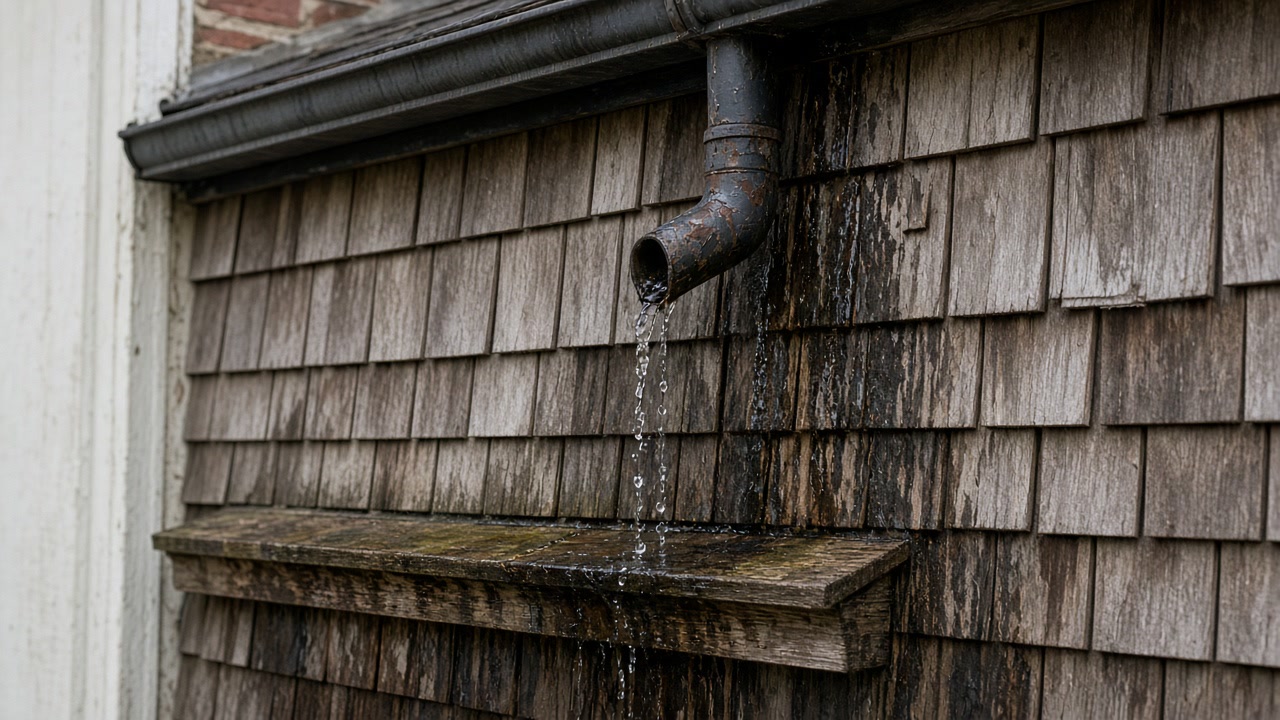
The landlordCleaning visible growth off a wall that is still wet buys about a season. The state's own booklet says it plainly: no moisture means no mold growth.
Each step creates the record the next one needs. Skipping to the complaint without the written notice is the most common way a tenant loses months.
Start with the rider, because it is the written duty that exists
P.L.2023 c.93 requires every landlord, before a lease is signed or renewed, to tell the tenant whether the property is in the FEMA Special Flood Hazard Area or the Moderate Risk Flood Hazard Area, and whether the landlord has actual knowledge that the rental premises or its parking areas have been subjected to flooding. For a residential lease it has to be a separate rider, individually signed or acknowledged by you, in not less than 12 point type. Not a clause on page nine. The duty has been live since March 20, 2024, the date the Department of Community Affairs set when it published the forms, and the Department posted a model Rental Flood Risk Notice for landlords alongside the updated seller's statement, so any lease signed or renewed since then should have one in the file. If the landlord violated that section and flooding then damaged your property or affected habitability or access, you may terminate the lease and pursue legal remedies, and prepaid rent must be refunded within 30 days. Go and look through your lease paperwork before you do anything else, because whether that signed sheet exists changes what kind of conversation you are about to have.
The 72 hour rule you may have read about has not passed
Senate Bill 760, the Mold Safe Housing Act, would require a landlord notified in writing by a tenant of a believed substantial mold hazard to investigate within 72 hours, clean and remove visible mold from surfaces, and fix in an expedited manner any leaking pipes, roofing or walls contributing to the wet condition, with referral to a relocation program through the Commissioner of Community Affairs if they do not. A companion part would stop a municipality issuing a certificate on change of occupancy until the building had been inspected and showed no visible or detectable indications of a substantial presence of mold. It was pre-filed for introduction in the 2026 session and it has not been enacted. So a tenant quoting a 72 hour deadline is quoting a bill. Write the notice anyway, because written notice is what every other route depends on, but do not expect a statutory clock to run from it.
Write about the water, not about the mold
A notice that says there is mold invites an argument about whether there is mold. A notice that says the wall under the front window is wet to the touch every time it rains hard, that the smell comes back in February, and that paint is lifting at the base of the plaster, describes a building fault that somebody has to explain. The New Jersey Department of Health booklet is useful here because it is the state's own document: it says molds may grow unnoticed above ceilings, behind walls, in attics, basements and crawl spaces, that drywall, ceiling tiles and wood framing all contain cellulose that mold grows on, and that as growth continues it can begin to break down the studs and joists of buildings. That last clause moves the question from cosmetic to structural, which is the register in which a landlord's insurer and a code officer both operate.
Whether this is the building or the way the unit is used
Some of it will not be the landlord's fault, and knowing which part is yours saves everybody time. Across July and August, 1,468 of the 1,488 normal hourly dew point values at Newark Liberty sit at 60 degrees Fahrenheit or above, so any surface below about 61 degrees condenses water out of ordinary summer air, and a below grade wall sits in the fifties all summer. The state health department lists condensation inside walls due to poor insulation as a moisture source in its own right, and the EPA says to keep indoor relative humidity below 60 percent and ideally between 30 and 50. Buy a hygrometer, shut the windows on humid days, run a dehumidifier and log the readings for two weeks. If the number falls and the smell goes, you have your answer and you need nobody. If it stays above 60 with the dehumidifier running, there is a water source and that is a building problem.
Which office in your town takes the complaint
There is no county mold office and no state one. Each of the eleven Essex County municipalities in this area enforces the New Jersey Uniform Construction Code through its own local agency under its own chapter: Montclair under Chapter 121, Belleville under Chapter 12, Bloomfield under Chapter 149, Caldwell under Chapter 81, Cedar Grove under Chapter 119, Glen Ridge under Chapter 15.04, Livingston under Chapter 110, Millburn under Chapter 9, Nutley under Chapter 272, Verona under Chapter 190 and West Orange under Chapter 13. In Montclair that is the Construction Code Enforcing Division, with a construction official and separate subcode officials, while flood hazard work sits under Chapter 161 with a Floodplain Administrator and stormwater under Chapter 295. If the suspected source is a service line or a sewer lateral rather than groundwater, note that Montclair runs its own Water Bureau and Sewer Utility, so that question goes to the township too.
How common a rented Montclair basement actually is
This is not an edge case here. Montclair has 15,726 occupied housing units and 6,773 of them, about 43 percent, are renter occupied, while just under half the stock, 49.8 percent, is single family detached. The rest is two family houses, converted houses and apartment buildings, which is to say buildings where the person who notices the damp is very often not the person who can authorize the work. Caldwell borough is the only municipality in this service area where renters are the majority at 58.1 percent of occupied homes, and Belleville is close behind at 44.1 percent renter occupied with only 42.2 percent of its stock single family detached. If you are the tenant of a converted house, establish who owns the building and who holds the lease obligations before you spend your own money on testing anything.
If your apartment is below grade
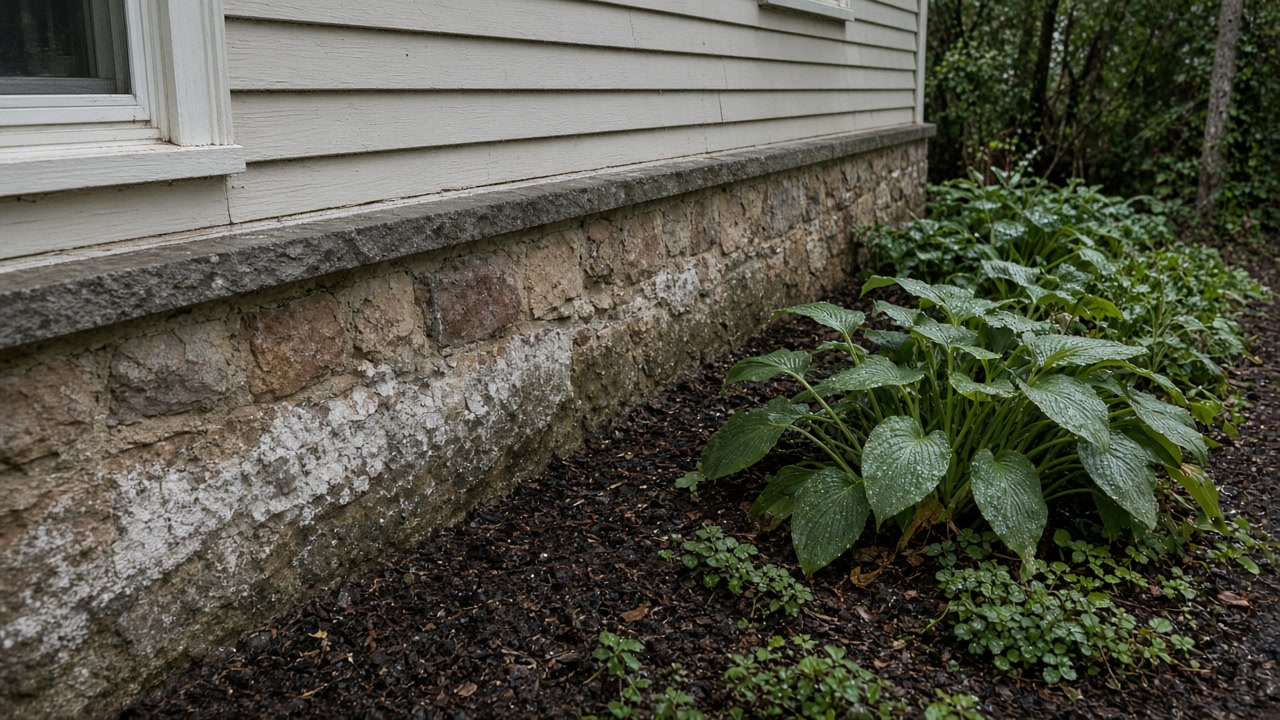
The lower level is where this argument usually happens, and the ground is working against it for half the year. The Boonton soil that underlies much of this urbanized ground carries a perched water table at roughly 18 to 36 inches deep from November to May in most years, which is the height of a basement wall rather than a depth below the footing. Montclair's Engineering Bureau puts 810 of about 11,000 tax parcels, some 7.5 percent, inside one or more flood zones, and the township's own 2025 hazard annex states that stormwater components may be outdated and undersized and that stormwater flooding is a repetitive issue including in areas outside the floodplain. So a landlord saying the building is not in a flood zone has answered a different question from the one you asked. What matters for the rider is actual knowledge that the premises have been subjected to flooding.
If you are the landlord reading this
The cheap version of this problem is the early one. Of the 265 Montclair flood insurance claims recording a basement type, 119 were on finished basements or enclosures, and a finished wall is exactly what turns a damp masonry wall into a demolition scope, because studs, batt insulation and drywall hold the water against the structure and hide it. Federal guidance puts the growth on the hidden face of the drywall and in the cold corners behind furniture, so a surface clean on a wall that is still wet buys a season at most. There is also a paper trail forming. When you sell, P.L.2023 c.93 asks whether the property has experienced flood damage, water seepage or pooled water from a natural flood event and how many times. An assessment now, written by someone who is not quoting the removal, is the document that makes both of those answers defensible.
What we can do, and what you do not need us for
If the humidity log comes down and the smell goes with it, you have solved it and you should keep the dehumidifier. If the landlord fixes a gutter and the wall dries by April, likewise. Where we are useful is the middle case, where two people disagree about whether a building has a fault and neither has anything written down. An assessment gives a dated record with readings, locations and photographs, a statement of where the water is arriving and from which direction, and a scope of work that a contractor can price and a landlord can act on. We keep that separate from the removal deliberately, because New Jersey licenses and certifies nobody for either half. The state Department of Health says it in the notice above the company lists it publishes, and adds that it does not endorse or qualify their work, so the separation is not something the state arranges for you. It is the only real protection either side has and somebody has to ask for it. Send the details of the unit and what you have already tried, and we will tell you which of those two cases you are in.
Sources used in this guide
P.L.2023 c.93 also requires every landlord to notify each tenant, before lease signing or renewal, whether the property is in the FEMA Special Flood Hazard Area or Moderate Risk Flood Hazard Area and whether the landlord has actual knowledge that the rental premises or its parking areas have been subjected to flooding. For a residential lease the notice must be a separate rider, individually signed or acknowledged by the tenant, in not less than 12 point type. Where a landlord violates the section and flooding then damages a tenant's property or affects habitability or access, the tenant may terminate the lease and pursue legal remedies, and the landlord must refund prepaid rent within 30 days.
Source: New Jersey Legislature, P.L.2023 c.93, accessed 2026-09-21
The Department of Community Affairs announced on December 21, 2023 that the forms implementing New Jersey's flood risk disclosure law had been published that day, and that sellers and landlords are required to use them beginning on March 20, 2024. The updated Seller's Property Condition Disclosure Statement carries a new heading titled Flood Risk, and the Department posted a model Rental Flood Risk Notice for landlords alongside it.
Source: New Jersey Department of Community Affairs, accessed 2026-09-21
The New Jersey Department of Health publishes lists of companies offering mold inspection, testing, remediation and training in homes, and the notice standing above those lists says two things: that there are no State certification programs for companies performing mold or general indoor air and environmental health services, and that the Department does not endorse or qualify the work or services provided by the listed private companies. The page was last reviewed on May 14, 2025.
Source: New Jersey Department of Health, Consumer, Environmental and Occupational Health Service, accessed 2026-09-21
Senate Bill 760 of the 222nd Legislature, the Mold Safe Housing Act, was pre-filed for introduction in the 2026 session. It would require a landlord notified in writing by a tenant of a believed substantial mold hazard to investigate the condition within 72 hours, to clean and remove any visible mold from surfaces, and to fix in an expedited manner any leaking pipes, roofing or walls contributing to the wet condition. A tenant whose landlord does not comply could ask the Commissioner of Community Affairs for referral to a relocation program. The bill has not been enacted.
Source: New Jersey Legislature, Senate Bill 760, 222nd Legislature, accessed 2026-09-21
The Mold Safe Housing Act, Senate Bill 760, would also block a change of occupancy: where a municipal ordinance requires a certificate of occupancy, certificate of inspection or other certification on change of occupancy, no such certificate could issue until the municipal officer had received a certification that the building had been inspected for and found free of any visible or detectable indications of the substantial presence of mold. The bill has not been enacted and no such requirement exists today.
Source: New Jersey Legislature, Senate Bill 760, 222nd Legislature, accessed 2026-09-21
Under P.L.2023 c.93, a New Jersey seller must disclose on the property condition disclosure statement whether the property is in a FEMA Special or Moderate Risk Flood Hazard Area and any actual knowledge of flood risks, before the purchaser becomes obligated under any contract. The prescribed questions include whether the seller has ever filed a flood damage claim with any insurer including the National Flood Insurance Program and the amount received, and whether the property has experienced any flood damage, water seepage or pooled water due to a natural flood event such as heavy rainfall, and if so how many times.
Source: New Jersey Legislature, P.L.2023 c.93, accessed 2026-09-21
The New Jersey Department of Health guidance booklet states that molds may grow unnoticed above ceilings, behind walls, in attics and basements or in crawl spaces, that many building materials such as drywall, ceiling tiles and wood framing contain cellulose on which mold can grow, and that as mold grows on those materials it can begin to break down the studs and joists of buildings.
Source: New Jersey Department of Health, Consumer, Environmental and Occupational Health Service, accessed 2026-09-21
The New Jersey Department of Health guidance booklet for residents lists the sources of excess moisture as plumbing leaks, leaking roofs or windows, high humidity, flooding, or condensation inside walls due to poor insulation, and states plainly that no moisture means no mold growth.
Source: New Jersey Department of Health, Consumer, Environmental and Occupational Health Service, accessed 2026-09-21
Newark Liberty International Airport is the nearest station with hourly climate normals. Across July and August, 1,468 of its 1,488 normal hourly dew point values are 60 degrees Fahrenheit or above. The July normal dew point averages 63.3 degrees and does not drop below 60.6 degrees at any hour of any day in the month.
Source: National Oceanic and Atmospheric Administration, National Centers for Environmental Information, 1991-2020 Climate Normals, accessed 2026-09-21
The EPA mold course states that indoor relative humidity should be kept below 60 percent and ideally between 30 and 50 percent, and lists high humidity at 60 percent relative humidity among the common moisture problems associated with mold.
Source: United States Environmental Protection Agency, Introduction to Mold and Mold Remediation, accessed 2026-09-21
The EPA guidance for remediation states that mold is frequently found on walls in cold corners behind furniture where condensation forms, and lists hidden mold locations including the back side of drywall, wallpaper, paneling, the top of ceiling tiles and the underside of carpets and pads, together with walls behind furniture where condensation forms.
Source: United States Environmental Protection Agency, Mold Remediation in Schools and Commercial Buildings, accessed 2026-09-21
Each of the eleven Essex County municipalities here enforces the New Jersey Uniform Construction Code through its own local agency rather than through the county or the state: Montclair under Chapter 121, Belleville under Chapter 12, Bloomfield under Chapter 149, Caldwell under Chapter 81, Cedar Grove under Chapter 119, Glen Ridge under Chapter 15.04, Livingston under Chapter 110, Millburn under Chapter 9, Nutley under Chapter 272, Verona under Chapter 190 and West Orange under Chapter 13.
Source: Essex County Office of Emergency Management, 2025 Hazard Mitigation Plan Update, Volume II, municipal annexes, accessed 2026-09-21
Montclair enforces the New Jersey Uniform Construction Code through its own Construction Code Enforcing Division under Chapter 121 of the township code, with a Construction Official and separate building, electrical, plumbing, fire and elevator subcode officials. Flood hazard work falls under Chapter 161, Flood Damage Prevention, administered by a Floodplain Administrator, and stormwater under Chapter 295.
Source: Essex County Office of Emergency Management, 2025 Hazard Mitigation Plan Update, Volume II, municipal annexes, accessed 2026-09-21
Montclair runs its own Water Bureau and Sewer Utility rather than buying service from a regional supplier, and the Montclair Water Bureau is listed in the county plan as serving 37,669 people. Neighboring Glen Ridge and Livingston also run their own water departments, while Belleville and Bloomfield are served by the Newark Water Department.
Source: Essex County Office of Emergency Management, 2025 Hazard Mitigation Plan Update, Volume I, accessed 2026-09-21
Montclair has 15,726 occupied housing units, of which 6,773 are renter occupied, about 43 percent. Just under half the housing stock, 49.8 percent, is single family detached, so the rest is two family houses, converted houses and apartment buildings.
Source: United States Census Bureau, American Community Survey 2020-2024 five year estimates, accessed 2026-09-21
Caldwell borough is the smallest municipality in this service area at 3,926 housing units, and the only one where renters are the majority: 58.1 percent of occupied homes are rented. Only 28.3 percent of the stock is single family detached, the lowest share here, and the median year built is 1959.
Source: United States Census Bureau, American Community Survey 2020-2024 five year estimates, accessed 2026-09-21
Belleville township has 15,104 housing units with a median year built of 1951, of which 4,887, 32.4 percent, were built in 1939 or earlier. Renters occupy 44.1 percent of occupied homes and only 42.2 percent of the stock is single family detached.
Source: United States Census Bureau, American Community Survey 2020-2024 five year estimates, accessed 2026-09-21
The Montclair Engineering Bureau states that 810 of the roughly 11,000 tax parcels in Montclair, about 7.5 percent, lie within one or more flood zones, and that there are multiple areas of Special Flood Hazard in the township associated with various waterways, most frequently Toney's and Nishuane Brooks.
Source: Township of Montclair, Engineering Bureau, accessed 2026-09-21
In its 2025 hazard mitigation annex, Montclair identifies that stormwater components in the township may be outdated and undersized and that stormwater flooding is a repetitive issue, including in areas outside the floodplain. The township also identifies that its ambulance unit building in the 1 percent floodplain has been flooded numerous times.
Source: Essex County Office of Emergency Management, 2025 Hazard Mitigation Plan Update, Volume II, municipal annexes, accessed 2026-09-21
The USDA official series description for the Boonton series, the till upland soil of northeastern New Jersey formed over red to brown shale, sandstone, basalt and granitic gneiss, records a fragipan in which saturated hydraulic conductivity is low or very low, and a perched water table at a depth of 46 to 91 centimeters, roughly 18 to 36 inches, from November to May of most years. The description notes that most Boonton soils are in areas that have become highly urbanized.
Source: United States Department of Agriculture, Natural Resources Conservation Service, Official Series Description, accessed 2026-09-21
Of the 265 Montclair flood insurance claims that record a basement type, 119 were on properties with a finished basement or enclosure and 138 on unfinished ones. Across this whole service area the same field shows finished basements outnumbering unfinished ones in Glen Ridge, Verona, Cedar Grove, Millburn, Livingston and Clifton.
Source: Federal Emergency Management Agency, OpenFEMA FIMA NFIP Redacted Claims v2, accessed 2026-09-21
Services this guide relates to
Need someone to look at it?
Send the details and we will come back to you.