Montclair, the surrounding Essex County towns and Clifton in Passaic County
Mold Inspection and Moisture Survey in Montclair, NJ
Find out where the water is arriving, from which side of the building, and whether there is a mold job here at all, in a written report from a company that is not selling you the removal.
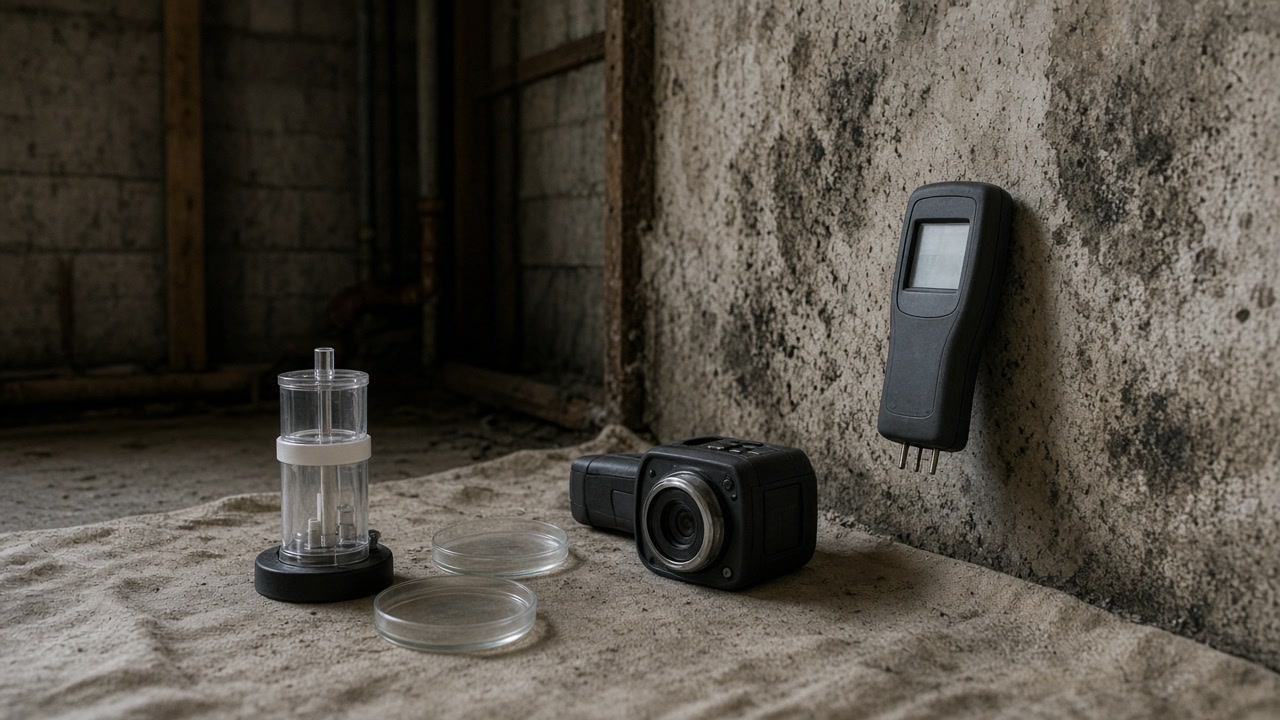
Mold Inspection quote
Tell us what you can see or smell, which room it is in, which way that wall faces, and whether the ground outside is higher on that side. That last one matters more here than it would almost anywhere else. With those four we can normally say whether a survey is the step you are on.
Would you rather talk it through? Call (315) 640-3590, answered 24/7.
$100 off your first job
Credited by us on your first booked job.
- One credit per customer per property, on your first booked job.
- Valid through December 31, 2026.
Mention this offer when you book. Full terms.
The verdict you get, and what it is built from
What you get is a verdict in writing: the rooms affected, the wet material, the direction the water is coming from, what stopping it involves, and what it would take to put the room right, with dated photographs and moisture readings behind every line of it. The direction is the part that matters here, and it is the part a walk around a basement with a flashlight will not settle. Montclair rises more than 450 feet from the eastern edge to the ridge inside six and a quarter square miles of land, and the soils across that slope are shallow over basalt and carry a perched water table above the rock for most of the winter and spring. Water moves sideways through that layer and comes out where the slope breaks, which means it reaches a foundation from the uphill side under pressure rather than rising up under the floor. The stain you can point at is regularly downstream of the point where the water got in, so a survey that starts at the stain finds the stain and nothing else. Buying the survey on its own is what keeps the answer honest: New Jersey licenses neither mold assessment nor mold remediation, so nothing in state law stops the company that finds the water from selling you the cure. The survey is bought on its own here, and whoever eventually cuts a wall is somebody else.
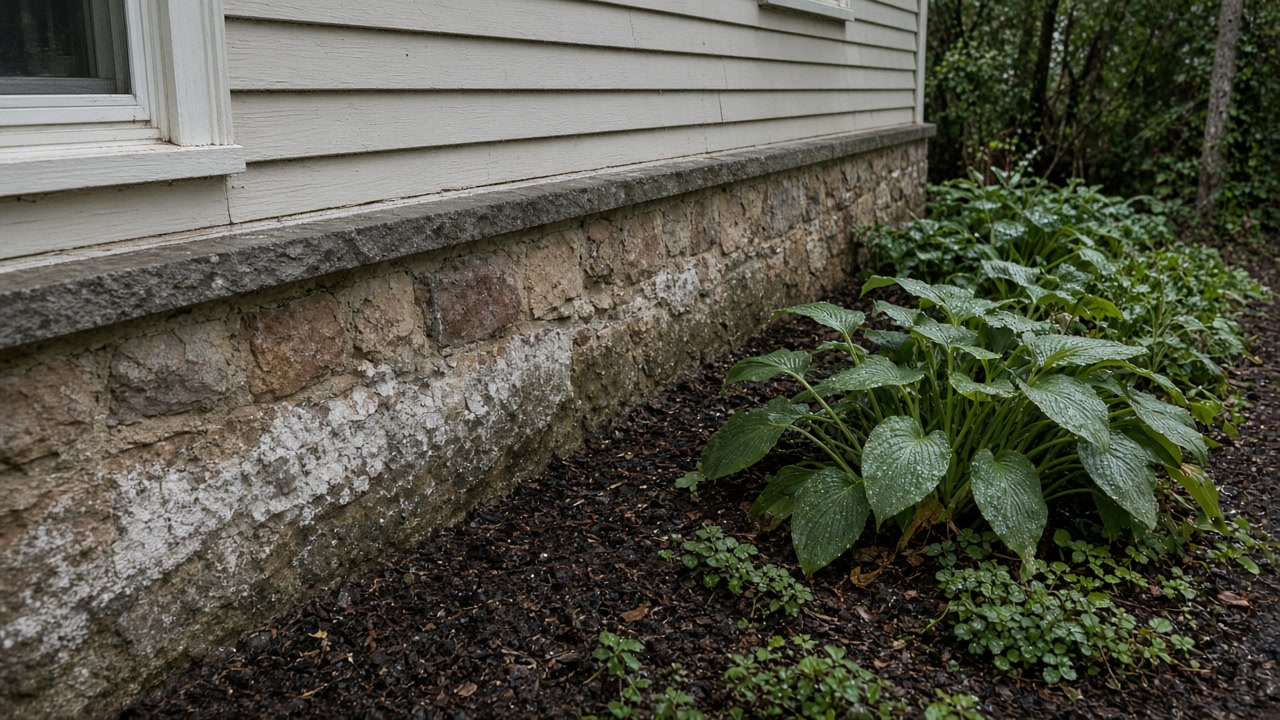
- A room by room walkthrough of the basement, the crawl space and any finished lower level, logging the growth, the staining, the white salt bloom on masonry and the corner the smell is strongest in
- Reading the ground before the room: which way the lot falls, where the driveway and the sidewalk shed water, what sits uphill of the affected wall, and what has been built or regraded up there recently
- Moisture meter and thermal imaging sweeps to find wet material behind plaster and lath, behind studwork built tight against masonry, and under a finished floor
- Tracing the water to a direction and a source: lateral seepage on the uphill wall, a downspout or a grade returning it to the house, a service line, a roof, or summer condensation on cold masonry with no leak at all
- Attic and roof space work where the moisture is the house's own: retrofitted insulation blocking original soffit vents, and bath fans discharging into the roof space instead of outside
- Measuring how much is affected, because square footage is what separates an afternoon with a bucket from a contract
- Air or surface sampling ordered only when a number would change what you do next, which is not most visits
- A written scope a removal contractor can price against: quantities room by room, a method against each, how far containment has to reach, the repair that stops the water, and the test that ends the job
- Records assembled for the reason you are asking: a sale, a buyer, a lender, an insurer, a landlord or a tenant, with the property's federal flood claim history pulled where one exists
- Verification once the work is finished: the space re-read, re-photographed and signed off by a party that did none of the cutting
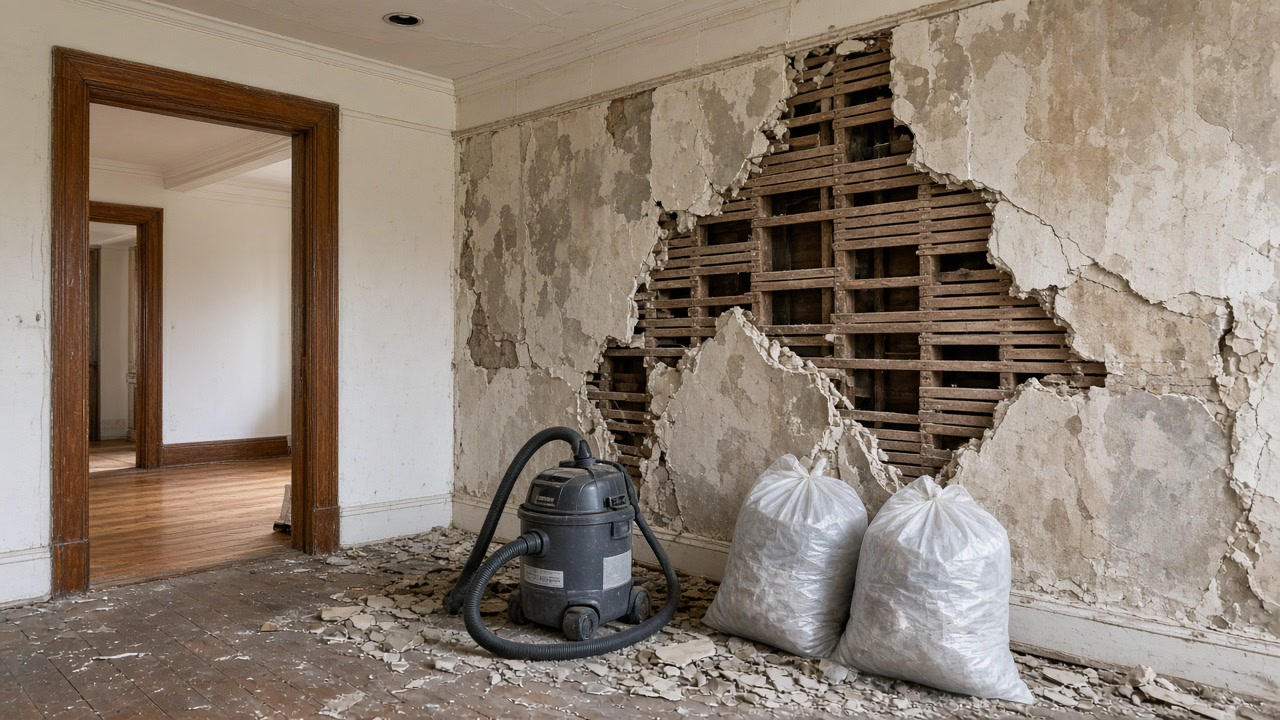
Why two Montclair basements need different visits
Two houses four minutes apart on this hill can need completely different visits. What moves it is which way the ground falls, what the wall is built of, and who has to read the answer at the end.
Which side of the house the wet wall is on
The federal soil survey for the till soils on this slope states in plain terms that lateral seepage is common, particularly at slope breaks, and that a perched water table sits within a foot of the surface in late winter. On a hillside that makes the uphill wall the first suspect and the visible stain the last witness. Knowing which side the ground is higher on, before anyone arrives, shortens the visit and sometimes changes its purpose.
The month you are asking in
The county's own hazard plan records water tables here as highest in late winter and into early spring, dropping from May or June to their lowest in September and October. A basement looked at in early fall is being seen at the driest moment of its year. If you are buying in October, ask what that wall does in March, because nobody will be able to tell you from the wall itself.
Whether the lower level is finished
Federal remediation guidance lists the back of drywall, the underside of carpet and pad and walls behind furniture among the places mold is normally found, which is to say on the face nobody can see. A clean painted basement wall is not evidence of a clean wall cavity, so on a finished room an honest survey has to open something, and where that opening goes is a decision worth making with a meter rather than a guess.
The age of the foundation, which in this township usually means prewar
Just under six in ten homes in the township date from 1939 or before, and the median build year sits at 1938. Treat no perimeter drain, no exterior membrane and no barrier under the slab as the standing condition of the house rather than as damage somebody did to it. It changes what is worth looking for and it changes what a sensible repair looks like.
Whether the smell is seasonal
Across July and August the normal hourly dew point at the nearest reporting station sits at or above 60 degrees almost without a break, and the EPA asks for indoor relative humidity below 60 percent. A below grade wall that sits in the fifties all summer pulls water straight out of ordinary air. A basement that is musty in August and fine in November is condensing, and that is a different problem with a much cheaper answer.
Why you are asking: a sale, a tenant, an insurer, or your own peace of mind
Since the 2023 disclosure law a New Jersey seller has to state on the property condition disclosure statement whether the property has had flood damage, water seepage or pooled water from heavy rainfall, how many times, and whether a flood claim was ever filed and for how much. A report written for your own decision and a report that has to stand behind that answer are not the same document, and it costs nothing to say which one you need before the visit.
Who owns the building
About 43 percent of occupied homes in Montclair are rented and only half the housing stock is single family detached, so the person who notices the damp in a two family or converted house is often not the person who can authorize opening a wall. Sorting out who commissions the report, and who it is addressed to, before anyone spends money is the difference between evidence and an opinion.
What the address's own record already says
Roughly one Montclair tax parcel in thirteen sits in a mapped flood zone, and better than a third of the township's paid flood claims were on properties the maps rated outside the hazard area. The township does not keep a list of flood damaged properties, so the record that exists is the seller's disclosure, the federal claim history and the neighbors. Some of that can be gathered before a survey is ordered, and occasionally it answers the question on its own.
Not sure the damp wall is the wet wall?
Describe the room and which way the ground falls outside it. We will tell you whether this needs a survey, a dehumidifier or nobody at all, and there is no obligation in asking.
From the ground outside to the written scope
Say what the report has to prove, before anyone comes out
Your own decision, a buyer, a seller's disclosure answer, a lender, an insurer, a landlord or a tenant. The answer changes what has to be measured, what has to be dated and who the report is addressed to, and settling it beforehand costs nothing.
Walk the ground outside first, and photograph it
Which way the lot falls, where the downspouts land, whether the grade returns water to the wall, and what is uphill. This part needs no contractor at all. A phone and ten minutes ahead of the visit leaves a dated record that predates every opinion formed later, and on this slope it often points straight at the answer.
Find the water, not the mark
Meters and thermal imaging read the wet area, which is reliably wider and higher than the stain on the finish. Where the soils perch a water table above the rock from November to May, a wall can be reading wet at the top of the footing in March and bone dry by October without anything having been repaired.
Separate a leak from condensation
Two different jobs that look identical on a wall. A hygrometer reading, the surface temperature and the season usually separate them in minutes. The state health department names condensation inside walls from poor insulation as a source of excess moisture in its own right, alongside leaks and flooding, and it is the one a leak hunt will never find.
Measure the area and name the material
Measured, not estimated, and recorded by room. Plaster on lath, batt insulation in a stud bay against masonry, a carpeted slab and a painted block wall are four different scopes at the same square footage, and the difference shows up on the removal invoice rather than on this one.
Pull the paper record for the address
The seller's disclosure statement, the federal flood claim history and, in the towns that keep one, the municipal list of flood damaged properties. Bloomfield, Glen Ridge and Verona report keeping such a list; Montclair, Belleville, Cedar Grove, Livingston, Millburn and Nutley report that they do not. Knowing which side of that line you are on decides whether this starts with a phone call or with a records request.
Put the scope in writing
Quantities room by room, a method against each, the containment, the outside repair without which none of it holds, and the test that ends the job. Contractors price that page rather than pricing their own imagination, and it is what the finished invoice gets measured against.
Verify the finished work against it
The space re-read, the opened cavity looked at, and a signed statement that the finished work matches the written scope, from a party with no stake in the removal. That record is also the one you will want years later, because in New Jersey the water history of a house now follows it into the next sale.
Mold Inspection work we have arranged
What mold inspection looks like
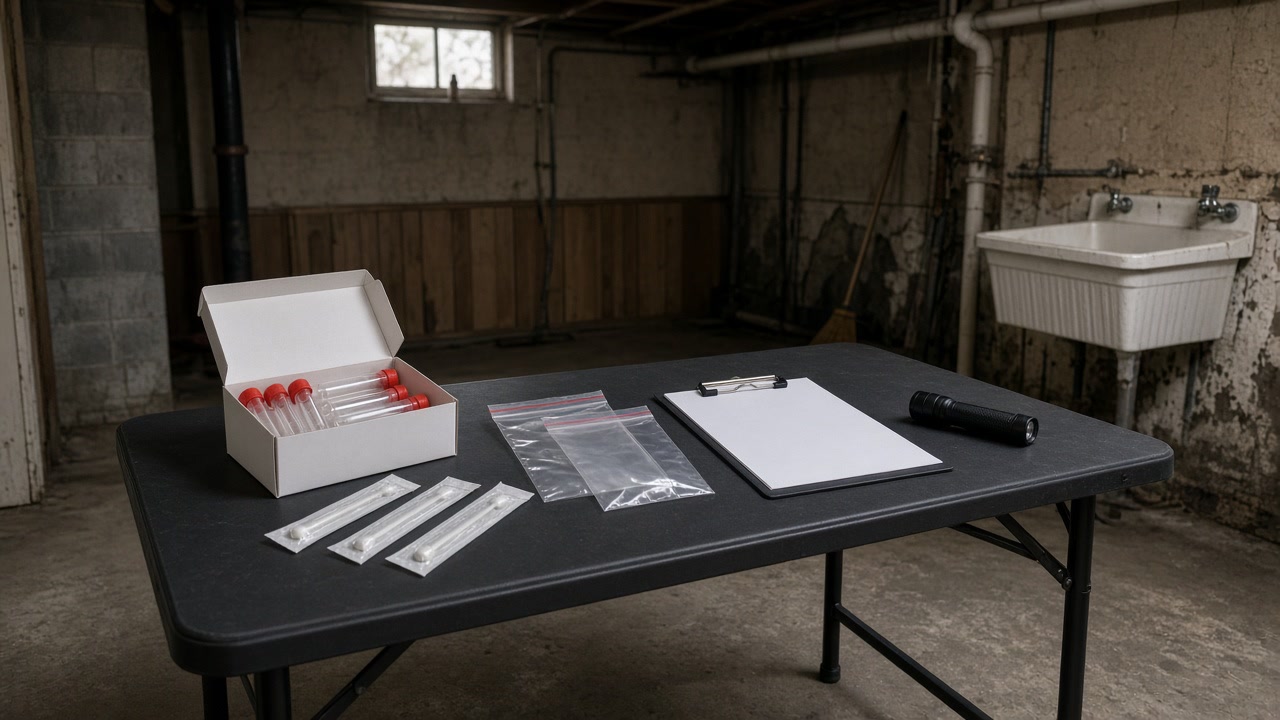
What sits outside a survey, and when there is no job here
When you may not need this at all
- A basement that goes musty in August and is fine again by November is condensing rather than leaking. Normal July dew points here hold at or above 60 degrees almost every hour of the month, and any surface colder than that collects water from the air by itself. Put a humidity meter in the room and run a dehumidifier before you spend anything with us. If the room then settles under 60 percent, that was the whole problem.
- If you can already see it and you already know where the water comes from, a sample mostly buys a name for something you have found. The state health department's line is that no moisture means no mold growth, so the money is better spent on the water than on the laboratory.
- If a pipe let go yesterday and there is nothing growing yet, the drying clock is your problem, not this page. Fans and dehumidifiers inside the first day or two matter far more than paperwork does.
- If you rent, start with written notice to the landlord and keep a copy. Since 2024 every New Jersey landlord has had to give tenants a signed flood risk rider before a lease is signed or renewed, and where that was never done and flooding then affects habitability, the tenant has a statutory route. Check whether the rider exists before paying for anything.
- If you are buying, read the seller's disclosure answers on flood damage, water seepage and prior claims first. That document is already written, it costs nothing to read, and on an older house it will often tell you whether a survey is worth ordering at all.
What is out of scope
- The removal itself. It goes to another firm, and that separation is the reason this survey exists as something you can buy by itself.
- The repair that stops the water: regrading, downspouts and drains, a roof, a retaining wall, or a plumber on a service line. Montclair runs its own water and sewer utility rather than buying from a regional supplier, so on a suspected service line the owner of the pipe decides who investigates.
- Asbestos and lead surveys. Separate disciplines with their own rules, and in a house of this age they belong before any demolition, not after it.
- Any opinion on health, symptoms or diagnosis.
- A pass or fail grade on the air. What the report records is what was found, measured, photographed and dated.
- Reading your insurance policy for you, or arguing a claim with an adjuster on your behalf.
- Legal advice. The report is a record of fact. Using it against a seller, a landlord or an insurer is a conversation for your own attorney.
Inspections arranged across Essex County
- Mold Inspection in Montclair
- Mold Inspection in Glen Ridge
- Mold Inspection in Bloomfield
- Mold Inspection in Verona
- Mold Inspection in Cedar Grove
- Mold Inspection in Nutley
- Mold Inspection in Belleville
- Mold Inspection in West Orange
- Mold Inspection in Caldwell
- Mold Inspection in Livingston
- Mold Inspection in Millburn
- Mold Inspection in Clifton
What people want to know before they book an inspection
Does anyone license mold inspection in New Jersey?
No. There is no state license for mold assessment and none for mold remediation, so nobody official has vetted the person who turns up at your door. A registration requirement has been proposed: Senate Bill 3275, introduced in February 2026, would add mold inspection and remediation contractors to the existing home improvement and home elevation contractor law rather than creating a separate license, and it has not been enacted. Until it is, the only registration a mold contractor here can actually hold is the general home improvement one, so ask for that number and check it. What is checkable without any register is the paperwork: readings with dates on them, photographs, an area somebody actually measured, and a scope written down before the work started.
Can the same company inspect the house and then remove the mold?
Legally yes, and most of the companies in this market sell it exactly that way. We are not, and the reason is specific to a hillside town. Once a company has been paid to find water, the cheapest finding for it is the one that sells the most removal, and on this slope the honest answer is frequently that the water arrives two walls away from the mold or that the room is condensing and needs no removal at all. Keeping the survey and the work in different hands is what makes that answer available.
If I can already see it, is testing worth paying for?
Usually not, which is an awkward thing for us to put in writing. Growth on a wall is already the finding, and no laboratory result tells you the thing that actually moves the price, which is where the water is arriving from. Sampling earns its fee in three spots: a smell nobody can locate, water of unknown origin, or a buyer, an insurer or a court that needs the condition to exist on paper.
My basement only smells in July. Is that mold?
It is usually condensation, and it is the most common thing we talk people out of paying for. Across July and August the normal hourly dew point at the nearest reporting station is 60 degrees or above for all but a handful of hours in the month, and a below grade masonry wall sits well under that all summer, so it wets itself out of the air with no leak, no crack and no storm behind it. Close the windows, run a dehumidifier and watch the meter. If the room will not hold below 60 percent with the machine running, there is a water source and then it is worth a visit.
I am buying in Montclair. What should I read before ordering anything?
Three documents, in this order. The seller's property condition disclosure statement, which under the 2023 law has to state whether the property has had flood damage, water seepage or pooled water from heavy rainfall and how many times, plus any prior flood insurance claim and the amount received. The federal flood claim record for the address. And the FEMA map, remembering that better than a third of the paid flood claims in this township were on properties rated outside the hazard area, and that the township's own submission to the county says stormwater flooding here repeats in places outside the floodplain. Montclair keeps no municipal list of flood damaged properties, so those three plus the neighbors are the record.
What is actually in the report?
Rooms, measured areas and the materials involved. Dated moisture readings. Photographs tied to locations. The direction the water is coming from and its likely source. The repair outside the room that has to happen for any of it to last. A method and a containment level against each area. And the test that should be used to call the work finished. It is written to be read by somebody who was not there, because that is usually who ends up reading it.
Show us what you are dealing with
A short description of the wall, the smell and the reason you are asking will do. We will come back with what it actually needs.