New Jersey Mold Law: the Disclosure Rule, and Two Bills
The mold law most people expect does not exist here, and the water law that does exist is the more useful one. Since March 20, 2024, P.L.2023 c.93 has required a New Jersey seller to disclose on the property condition disclosure statement whether the property has had flood damage, water seepage or pooled water from a natural flood event and how many times, plus any prior flood insurance claim, and required every landlord to hand the tenant a separately signed flood risk rider. New Jersey licenses and certifies nobody to inspect or remove mold, and the state Department of Health says so on its own mold page.
Already know you need someone out? Call (315) 640-3590, answered 24/7.
The disclosure a New Jersey seller has to make now
The act set no calendar date of its own. It made the seller and landlord duties apply from the 90th day after the responsible agencies published the forms, and the Department of Community Affairs published them on December 21, 2023 for use beginning March 20, 2024. Since that date, under P.L.2023 c.93, a seller must disclose on the property condition disclosure statement whether the property sits in a FEMA Special or Moderate Risk Flood Hazard Area, and any actual knowledge of flood risks, before the purchaser becomes obligated under any contract. The prescribed questions go further than the zone. They ask whether the seller has ever filed a flood damage claim with any insurer, including the National Flood Insurance Program, and the amount received. They ask whether the property has experienced any flood damage, water seepage or pooled water due to a natural flood event such as heavy rainfall, and if so, how many times. That count is the sentence that changes conversations on this hillside, because water seepage after heavy rain is exactly what a perched water table produces, and it now has to be written down and signed. This is a document you can go and read today, which is more than can be said for the mold bills below. It also draws a line through the market: a house that changed hands here on or after March 20, 2024 has a written answer on file, and one sold before it almost certainly does not.
Does a basement that took water have to go on the form?
If you have actual knowledge of it and it came from a natural flood event such as heavy rainfall, yes, and you also have to say how many times. That is the plain reading of the questions the statute prescribes. Two distinctions are worth holding onto. The question is about flood damage, water seepage or pooled water from a natural flood event, so a burst supply line or a failed washing machine hose is a different category of problem, and summer condensation on a cold below grade wall is not a flood event either. Second, the flood insurance question is separate and specific: whether a claim was ever filed and the amount received. A buyer who is told the answer is unknown on a pre war house should treat that as a reason to look harder rather than as a clean answer, because 115 of Montclair's 301 paid flood insurance claims were on properties rated outside the Special Flood Hazard Area.
The rider every landlord has to hand over
The same statute puts a duty on landlords. Before a lease is signed or renewed, the landlord must tell the tenant whether the property is in the FEMA Special Flood Hazard Area or the Moderate Risk Flood Hazard Area, and whether the landlord has actual knowledge that the rental premises or its parking areas have been subjected to flooding. For a residential lease this cannot be buried in the lease: it must be a separate rider, individually signed or acknowledged by the tenant, in not less than 12 point type. The remedy has teeth. Where a landlord violates the section and flooding then damages the tenant's property or affects habitability or access, the tenant may terminate the lease and pursue legal remedies, and the landlord must refund prepaid rent within 30 days. For a tenant in a below grade apartment, this is currently the strongest written duty in the whole picture.
New Jersey licenses and certifies nobody to work on mold
The state Department of Health publishes lists of companies offering mold inspection, testing, remediation and training in homes, and the notice standing above those lists says two things. There are no State certification programs for companies performing mold or general indoor air and environmental health services, and the Department does not endorse or qualify the work or services those private companies provide. The page was last reviewed on May 14, 2025. So there is no state license, no state certificate and no state registration for assessing mold or for removing it, and being on the state's own list is not a credential. One bill would change that and it has not passed: Senate Bill 3275, introduced on February 2, 2026, would establish a registration requirement for mold inspection and remediation contractors by amending and supplementing P.L.2004 c.16, the statute governing home improvement and home elevation contractors. That tells you the shape it will take when it arrives, a number on a home improvement registration rather than a credential of its own. Treat any claim of a state mold credential today as a claim about something that does not exist.
The Mold Safe Housing Act is a bill, not a rule you can use
Senate Bill 760, the Mold Safe Housing Act, was pre-filed for introduction in the 2026 session. It would require a landlord notified in writing by a tenant of a believed substantial mold hazard to investigate within 72 hours, to clean and remove visible mold from surfaces, and to fix in an expedited manner any leaking pipes, roofing or walls contributing to the wet condition, with a route to the Commissioner of Community Affairs and a relocation program if the landlord does not comply. A second part of the same bill would block a change of occupancy: where a municipal ordinance requires a certificate of occupancy or inspection on change of occupancy, no certificate could issue until the municipal officer had a certification that the building was inspected and showed no visible or detectable indications of a substantial presence of mold. Neither has been enacted. If a contractor tells you your town will not sign off without a mold clearance, they are describing that bill.
Whether your town can tell you if an address has flooded
This varies sharply across the towns here and it decides where your research starts. In the 2025 Essex County plan, Bloomfield, Glen Ridge and Verona report that they maintain a list of properties damaged by flooding. Bloomfield keeps two, adding a list of owners interested in flood mitigation, and it is the only town here that also has staff holding the CFM floodplain manager credential. Montclair, Belleville, Cedar Grove, Livingston, Millburn and Nutley report that they do not keep such a list. West Orange answers in the near future, and Caldwell says it has no formal process but that the information sits in borough incident reports. So a Montclair buyer cannot ring the township and ask, and has to work from the seller's disclosure and the federal claim record instead. Clifton is a Passaic County city, so the Essex County documents everyone links to do not cover it at all.
Three separate town permissions can touch one basement job
Montclair enforces the New Jersey Uniform Construction Code through its own Construction Code Enforcing Division under Chapter 121, with a construction official and separate building, electrical, plumbing, fire and elevator subcode officials. Flood hazard work falls under Chapter 161, Flood Damage Prevention, administered by a Floodplain Administrator, and stormwater under Chapter 295. On top of that, Chapter 294 covers steep slopes and exists to protect people and property from improper construction and development on steep slope areas, naming erosion, siltation, flooding, soil slippage and surface water runoff as the hazards it addresses. That last one matters here, because regrading or excavating a drainage structure against an uphill foundation can land inside a slope ordinance rather than being simple landscaping. Every one of the eleven Essex County towns in this area runs its own code agency under its own chapter, and where the work is in a mapped hazard area the state Inland Flood Protection Rule now sets the elevation to build to. The permit desk is also a check on the contractor: section 12 of P.L.2004 c.16 says no municipality shall issue a construction permit for any home improvement to a contractor who is not registered under the act, and that the act supersedes municipal contractor licensing other than water, sewer, utility and land use rules. So no town here can invent a mold license of its own, and the answer is the same in all twelve.
What to ask for when there is no license to check
Three questions do most of the filtering. Is the company writing the assessment also quoting the removal, and if so, who checks their scope? What is their contractor registration number, and can you see the insurance certificate that goes with it? And will the findings come as a written report with readings, locations and a scope of work, rather than as a verbal figure? Be clear about what that registration proves. Under the Contractors' Registration Act, P.L.2004 c.16, nobody may engage in the business of making or selling home improvements, which includes repairing, restoring, renovating and demolishing any part of a residential property, unless registered with the Division of Consumer Affairs, and registration is annual and takes a form, a fee, a criminal conviction disclosure statement and proof of commercial general liability insurance of at least 500,000 dollars per occurrence. There is no examination, no training course and no experience requirement anywhere in it. The state checked a form, a fee and a policy. It did not check whether anyone at the company can build a containment. What you do get from it is worth using: the number must appear on contracts, advertising and vehicles, any home improvement contract over 500 dollars must be in writing and carry the number and the insurance certificate, and you can cancel before midnight of the third business day and have your money back within 30 days. A separate act, P.L.2023 c.237, sets up a licensing board for home improvement contractors with an apprenticeship route or two years of supervised work, board education and a passed examination behind it, but its prohibition on unlicensed work does not take effect until six months after the board issues its rules, and nothing in that act mentions mold. You do not need a statute to get the separation that the licensing bills are trying to create. Commission the assessment as its own piece of work, take the written scope to whoever does the removal, and have the verification done by the party that is not being paid for the demolition. That is what we arrange here, and it is the reason the findings are put in writing before anyone proposes taking a wall apart.
Sources used in this guide
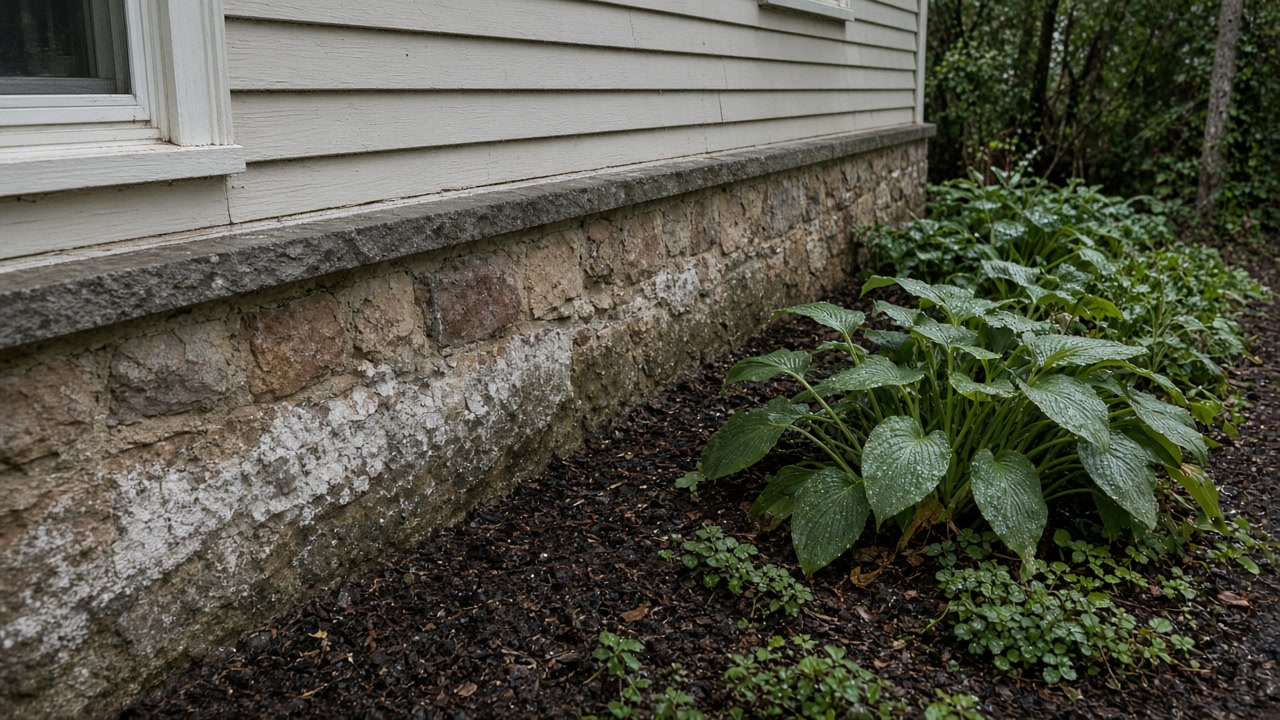
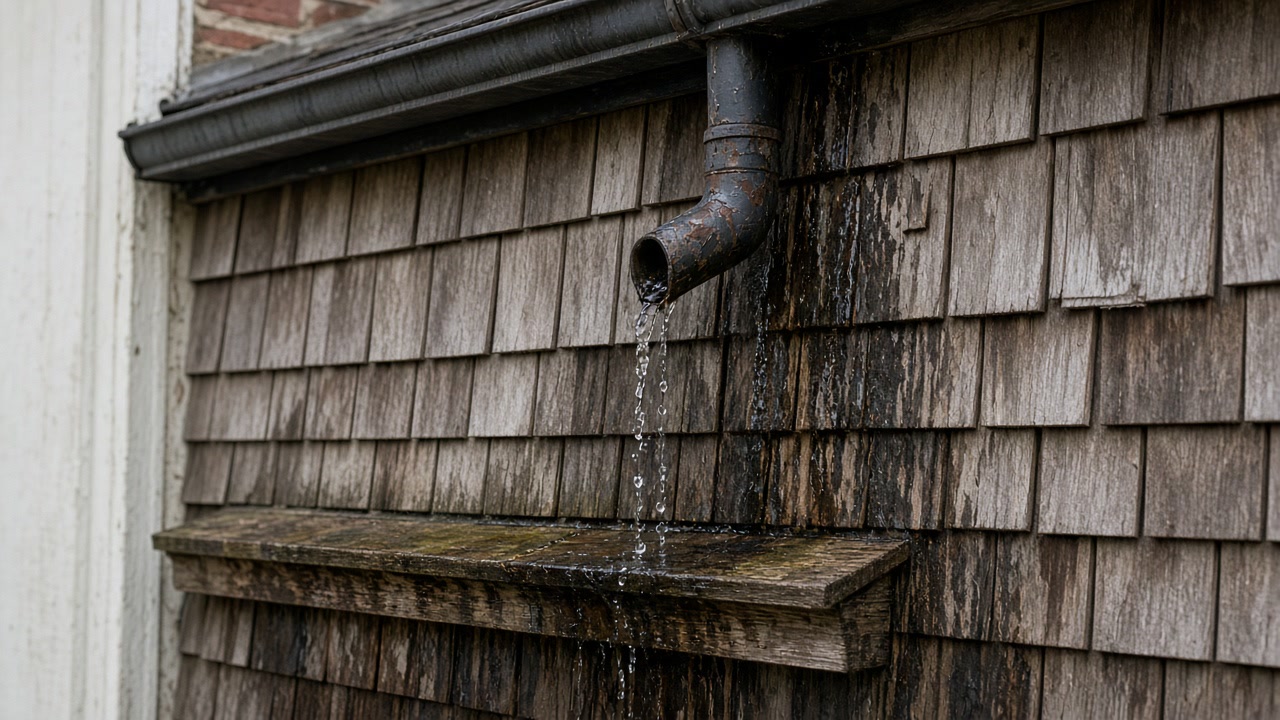
Under P.L.2023 c.93, a New Jersey seller must disclose on the property condition disclosure statement whether the property is in a FEMA Special or Moderate Risk Flood Hazard Area and any actual knowledge of flood risks, before the purchaser becomes obligated under any contract. The prescribed questions include whether the seller has ever filed a flood damage claim with any insurer including the National Flood Insurance Program and the amount received, and whether the property has experienced any flood damage, water seepage or pooled water due to a natural flood event such as heavy rainfall, and if so how many times.
Source: New Jersey Legislature, P.L.2023 c.93, accessed 2026-09-21
The Department of Community Affairs announced on December 21, 2023 that the forms implementing New Jersey's flood risk disclosure law had been published that day, and that sellers and landlords are required to use them beginning on March 20, 2024. The updated Seller's Property Condition Disclosure Statement carries a new heading titled Flood Risk, and the Department posted a model Rental Flood Risk Notice for landlords alongside it.
Source: New Jersey Department of Community Affairs, accessed 2026-09-21
P.L.2023 c.93 also requires every landlord to notify each tenant, before lease signing or renewal, whether the property is in the FEMA Special Flood Hazard Area or Moderate Risk Flood Hazard Area and whether the landlord has actual knowledge that the rental premises or its parking areas have been subjected to flooding. For a residential lease the notice must be a separate rider, individually signed or acknowledged by the tenant, in not less than 12 point type. Where a landlord violates the section and flooding then damages a tenant's property or affects habitability or access, the tenant may terminate the lease and pursue legal remedies, and the landlord must refund prepaid rent within 30 days.
Source: New Jersey Legislature, P.L.2023 c.93, accessed 2026-09-21
The New Jersey Department of Health publishes lists of companies offering mold inspection, testing, remediation and training in homes, and the notice standing above those lists says two things: that there are no State certification programs for companies performing mold or general indoor air and environmental health services, and that the Department does not endorse or qualify the work or services provided by the listed private companies. The page was last reviewed on May 14, 2025.
Source: New Jersey Department of Health, Consumer, Environmental and Occupational Health Service, accessed 2026-09-21
The Contractors' Registration Act, P.L.2004 c.16, approved May 13, 2004, provides at section 3 that no person shall offer to perform, or engage in, the business of making or selling home improvements unless registered with the Division of Consumer Affairs, and defines home improvement to include repairing, restoring, renovating and demolishing the whole or any part of any residential property. Registration is annual and takes a form, a fee, a criminal conviction disclosure statement and proof of commercial general liability insurance of at least 500,000 dollars per occurrence filed with the director. The registration number must be displayed in every advertisement distributed in the state, on contracts and correspondence, and on commercial vehicles. Any home improvement contract over 500 dollars must be in writing, must carry the registration number and a copy of the insurance certificate, and can be canceled by the consumer before midnight of the third business day with a full refund inside 30 days.
Source: New Jersey Legislature, P.L.2004 c.16 as enacted, accessed 2026-09-21
Section 12 of P.L.2004 c.16 provides that no municipality shall issue a construction permit for any home improvement to a contractor who is not registered under the act, and that the act supersedes any municipal ordinance or regulation providing for the licensing or registration of contractors, other than water, sewer, utility and land use rules. Section 13 preserves each municipality's power to inspect a contractor's work and to regulate the standards and the manner in which that work is done.
Source: New Jersey Legislature, P.L.2004 c.16 as enacted, accessed 2026-09-21
The Home Improvement and Home Elevation Contractor Licensing Act, P.L.2023 c.237, approved January 8, 2024, creates the New Jersey State Board of Home Improvement and Home Elevation Contractors. Section 7 requires an applicant for a license to have completed a registered apprenticeship, or an equivalent program run by a trade school, or two years of home improvement work under the direct oversight of a licensed contractor, plus board education and a passed board examination. The prohibition itself sits at section 9, that no individual shall perform home improvement services unless licensed by the board, and section 5 holds sections 9 through 13 inoperative until the first day of the sixth month next following the board's promulgation of its rules and regulations. Nothing in the act mentions mold.
Source: New Jersey Legislature, P.L.2023 c.237 as enacted, accessed 2026-09-21
Senate Bill 3275, introduced February 2, 2026, would establish a registration requirement for mold inspection and remediation contractors by amending and supplementing P.L.2004 c.16, the statute that governs home improvement and home elevation contractors and the New Jersey State Board of Home Improvement and Home Elevation Contractors. It is the Senate companion to the Assembly registration bill and has not been enacted.
Source: New Jersey Legislature, Senate Bill 3275, 222nd Legislature, accessed 2026-09-21
Senate Bill 760 of the 222nd Legislature, the Mold Safe Housing Act, was pre-filed for introduction in the 2026 session. It would require a landlord notified in writing by a tenant of a believed substantial mold hazard to investigate the condition within 72 hours, to clean and remove any visible mold from surfaces, and to fix in an expedited manner any leaking pipes, roofing or walls contributing to the wet condition. A tenant whose landlord does not comply could ask the Commissioner of Community Affairs for referral to a relocation program. The bill has not been enacted.
Source: New Jersey Legislature, Senate Bill 760, 222nd Legislature, accessed 2026-09-21
The Mold Safe Housing Act, Senate Bill 760, would also block a change of occupancy: where a municipal ordinance requires a certificate of occupancy, certificate of inspection or other certification on change of occupancy, no such certificate could issue until the municipal officer had received a certification that the building had been inspected for and found free of any visible or detectable indications of the substantial presence of mold. The bill has not been enacted and no such requirement exists today.
Source: New Jersey Legislature, Senate Bill 760, 222nd Legislature, accessed 2026-09-21
Whether a town can tell you if an address has flooded varies sharply here. In the 2025 county plan, Bloomfield, Glen Ridge and Verona report that they maintain a list of properties damaged by flooding. Montclair, Belleville, Cedar Grove, Livingston, Millburn and Nutley report that they do not. West Orange answers in the near future, and Caldwell answers that it has no formal process but that the information is part of the borough's incident reports.
Source: Essex County Office of Emergency Management, 2025 Hazard Mitigation Plan Update, Volume II, municipal annexes, accessed 2026-09-21
In the 2025 Essex County plan, Montclair reports that floodplain management sits with its Department of Community Services, that no staff hold the CFM floodplain manager credential, and that the township does not maintain a list of properties that have been damaged by flooding or a list of property owners interested in flood mitigation.
Source: Essex County Office of Emergency Management, 2025 Hazard Mitigation Plan Update, Volume II, municipal annexes, accessed 2026-09-21
Glen Ridge reports in the 2025 county plan that floodplain management is handled by its engineering function through a consultant, that no borough staff hold the CFM floodplain manager credential, and that the borough does maintain a list of properties that have been damaged by flooding.
Source: Essex County Office of Emergency Management, 2025 Hazard Mitigation Plan Update, Volume II, municipal annexes, accessed 2026-09-21
Bloomfield reports in the 2025 county plan that floodplain management sits with its Engineering function, that it does have staff holding the CFM floodplain manager credential, and that it maintains both a list of properties damaged by flooding and a list of owners interested in flood mitigation.
Source: Essex County Office of Emergency Management, 2025 Hazard Mitigation Plan Update, Volume II, municipal annexes, accessed 2026-09-21
Verona reports in the 2025 county plan that floodplain management sits with public works through a consulting engineer, that the consulting engineer provides CFM floodplain manager services, and that the township maintains a list of properties that have been damaged by flooding.
Source: Essex County Office of Emergency Management, 2025 Hazard Mitigation Plan Update, Volume II, municipal annexes, accessed 2026-09-21
Clifton is a Passaic County city, not an Essex County municipality, and it is the only one in this service area. Its flood hazard mapping comes from the Flood Insurance Study for Passaic County dated April 17, 2020, its hazard mitigation annex sits in the Passaic County plan rather than the Essex County plan, and its NFIP community number is 340398 against the 3401xx numbers used across Essex.
Source: Federal Emergency Management Agency, OpenFEMA NFIP Community Status Book, accessed 2026-09-21
Montclair enforces the New Jersey Uniform Construction Code through its own Construction Code Enforcing Division under Chapter 121 of the township code, with a Construction Official and separate building, electrical, plumbing, fire and elevator subcode officials. Flood hazard work falls under Chapter 161, Flood Damage Prevention, administered by a Floodplain Administrator, and stormwater under Chapter 295.
Source: Essex County Office of Emergency Management, 2025 Hazard Mitigation Plan Update, Volume II, municipal annexes, accessed 2026-09-21
Montclair Township Code Chapter 294, Steep Slopes, exists to protect people and property from improper construction, building and development on steep slope areas, and the code names the hazards it is aimed at as erosion, siltation, flooding, soil slippage, surface water runoff and pollution of surface and ground water supplies from non point sources.
Source: Essex County Office of Emergency Management, 2025 Hazard Mitigation Plan Update, Volume II, municipal annexes, accessed 2026-09-21
Each of the eleven Essex County municipalities here enforces the New Jersey Uniform Construction Code through its own local agency rather than through the county or the state: Montclair under Chapter 121, Belleville under Chapter 12, Bloomfield under Chapter 149, Caldwell under Chapter 81, Cedar Grove under Chapter 119, Glen Ridge under Chapter 15.04, Livingston under Chapter 110, Millburn under Chapter 9, Nutley under Chapter 272, Verona under Chapter 190 and West Orange under Chapter 13.
Source: Essex County Office of Emergency Management, 2025 Hazard Mitigation Plan Update, Volume II, municipal annexes, accessed 2026-09-21
Floodplain manager credentialing is uneven across this service area. In the 2025 county plan, Bloomfield, Livingston, Nutley and West Orange report having staff who hold the CFM floodplain manager credential, Millburn reports that the township engineer holds it, and Verona reports that the service comes from its consulting engineer. Belleville, Caldwell, Cedar Grove, Glen Ridge and Montclair report that no staff hold it.
Source: Essex County Office of Emergency Management, 2025 Hazard Mitigation Plan Update, Volume II, municipal annexes, accessed 2026-09-21
The 2025 Essex County hazard mitigation plan records that New Jersey's Inland Flood Protection Rule has expanded overall flood vulnerability as assessed for its municipalities and will require new construction and redevelopment to elevate to the New Jersey Design Flood Elevation.
Source: Essex County Office of Emergency Management, 2025 Hazard Mitigation Plan Update, Volume II, municipal annexes, accessed 2026-09-21
Of Montclair's 301 paid federal flood insurance claims, 115 were on properties rated in zone X, B or C, that is outside the Special Flood Hazard Area, against 184 rated in zone A or AE inside it.
Source: Federal Emergency Management Agency, OpenFEMA FIMA NFIP Redacted Claims v2, accessed 2026-09-21
Not one of the eleven Essex County municipalities in this service area participates in FEMA's Community Rating System. Belleville, Bloomfield, Caldwell, Cedar Grove, Glen Ridge, Livingston, Millburn, Montclair, Nutley, Verona and West Orange all record their Community Rating System status in the 2025 county plan as no or not participating.
Source: Essex County Office of Emergency Management, 2025 Hazard Mitigation Plan Update, Volume II, municipal annexes, accessed 2026-09-21
Services this guide relates to
Need someone to look at it?
Send the details and we will come back to you.