Montclair, the surrounding Essex County towns and Clifton in Passaic County
Mold Removal in Montclair, Starting With Where the Water Gets In
Tell us what you can see or smell, which room it is in and which way that wall faces, and you get a straight read on what it is, how far it runs and what putting it right actually involves. Montclair steps down a hillside where the soil holds water above the rock for most of the winter and spring, so the damp patch you are looking at is often downstream of the wall the water came through, and finding that comes before anyone proposes removing anything. The company that writes the finding is not the company that sells you the removal, and the work itself goes to vetted local trades who are licensed and insured for it.
Request a Quote
Tell us what you can see or smell, roughly where in the house it is, and which side of the building that wall is on. Direction usually tells us more than the size of the patch does, because it points at where the water arrived rather than where it ended up.
Would you rather talk it through? Call (315) 640-3590, answered 24/7.
$100 off your first job
Credited by us on your first booked job.
- One credit per customer per property, on your first booked job.
- Valid through December 31, 2026.
Mention this offer when you book. Full terms.
Finding the water, taking out what it ruined, drying what can be saved
Which of the three you need turns almost entirely on whether anything is still wet. Water that arrived in the last day or two can often be dried in place, and the EPA describes acting inside that 24 to 48 hour window as the way to avoid needing a removal at all, so drying is its own job with its own clock and it is the cheapest outcome available to you. Past that window, somebody has to establish how far the water went and which side of the building it came in on before anything is cut, and that finding is written by a different company than the one that does the cutting.
Mold Inspection and Moisture Survey
Find out where the water is arriving, from which side of the building, and whether there is a mold job here at all, in a written report from a company that is not selling you the removal.
Start here if there is a mark on the wall or a smell in the room, and nobody neutral has established where the water is arriving from.
About Mold Inspection →Mold Removal and Remediation
Take out the material the mold has grown into, under containment, and put the room back with the original plaster, trim and stonework treated as worth saving, all priced against a scope somebody else wrote.
Start here if the water has been found and the material it soaked into has to come out.
About Mold Removal →Water Damage Drying and Flooded Basement Cleanup
Water out and the structure dried inside the one to two day window that separates a cleanup from a strip out.
Start here if water arrived in the last few days, or something has not dried out since.
About Water Damage Drying →Find out where the water is getting in first
Describe what you are looking at. We will tell you whether this is an assessment, a removal, a drying job, or nothing that needs us at all.
How a Montclair mold job runs
Water first, then the extent in writing by somebody who is not bidding on the demolition, then the work priced against that document.
Tell us what you are looking at, and which way the wall faces
Send the form with your ZIP code and a few lines, or call and say it out loud. The direction matters more here than almost anywhere else, because the USDA series description for this ground records lateral seepage at slope breaks, so the uphill wall is the suspect before the gutters are. Before anyone comes out we work out whether this is a drying job, a survey, a removal, or nothing that needs us at all.
Dry it if anything is still wet, then measure how far it went
The EPA puts the response window on water damage at 24 to 48 hours and describes acting inside it as the way to avoid needing remediation, so if water is still arriving the drying comes first and can leave nothing to remove. Once the building has stopped moving, the survey maps moisture behind the finish, works out the direction of travel and writes a scope with meter readings and dated photographs behind every line.
A different company does the removal, against that written scope
The removal contractor bids the document rather than their own opinion of it, which is what stops the scope growing to fit the truck. On a prewar house the plan says what comes off and what goes back: trim and baseboard are taken off, labeled and reinstated rather than skipped, because close to six in ten Montclair homes were built in 1939 or earlier and the original work is not reorderable.
What makes this a local problem
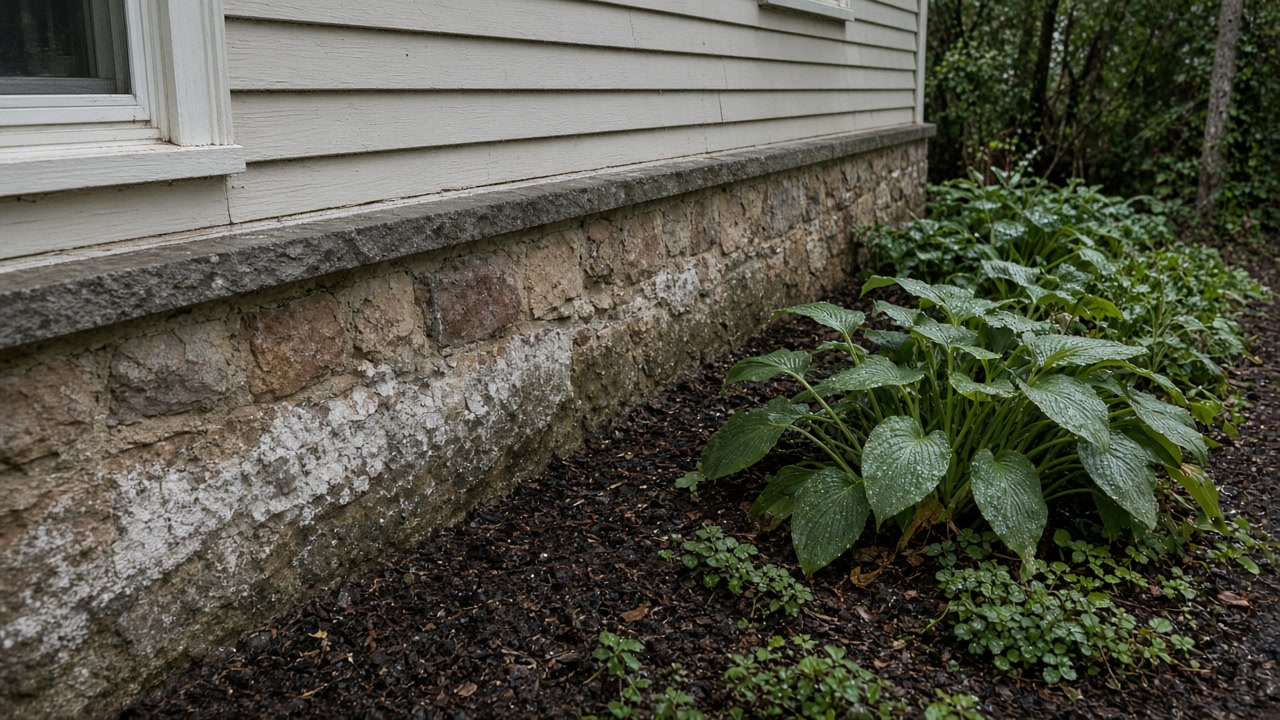
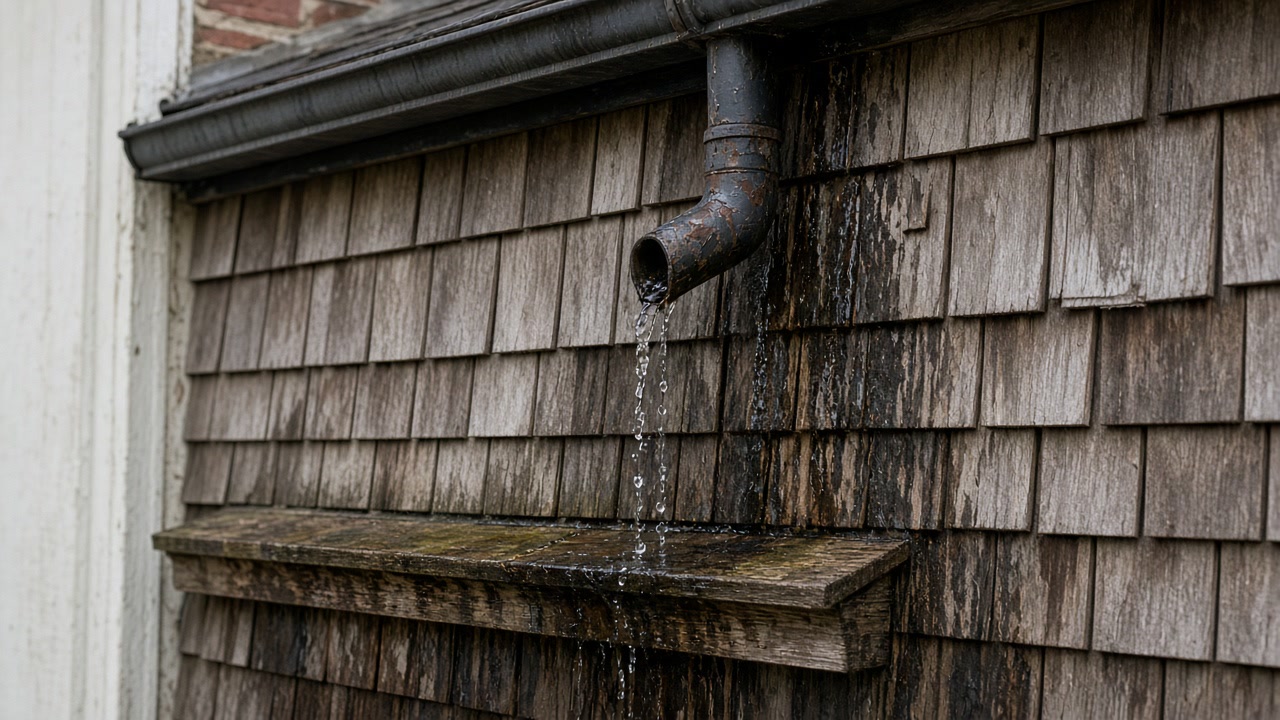
The USDA official series description for the Haledon soil series, formed in coarse textured glacial till made primarily of basalt with red sandstone and shale, states that these soils sit at the base of steeper sloping uplands and in shallow drainageways, that a perched high water table is within 30 centimeters of the surface in late winter and early spring of most years and following periods of extended rainfall, and that lateral seepage is common, particularly at slope breaks.
Source: United States Department of Agriculture, Natural Resources Conservation Service, Official Series Description, accessed 2026-09-21
The American Community Survey puts the median year a Montclair township housing unit was built at 1938, which is 42 years older than the national median and 20 years older than the Essex County median. The value carries no margin of error because it sits at the bottom of the range the table reports.
Source: United States Census Bureau, American Community Survey 2020-2024 five year estimates, accessed 2026-09-21
The EPA remediation guidance presents Table 1 as strategies to respond to water damage within 24 to 48 hours, describing these as guidelines designed to avoid the need for remediation of mold growth by taking quick action before growth starts, and its remediation flow chart instructs that non moldy items be dried within 48 hours.
Source: United States Environmental Protection Agency, Mold Remediation in Schools and Commercial Buildings, accessed 2026-09-21
Of Montclair's 301 paid federal flood insurance claims, 115 were on properties rated in zone X, B or C, that is outside the Special Flood Hazard Area, against 184 rated in zone A or AE inside it.
Source: Federal Emergency Management Agency, OpenFEMA FIMA NFIP Redacted Claims v2, accessed 2026-09-21
Here the water usually is not coming up, it is coming across
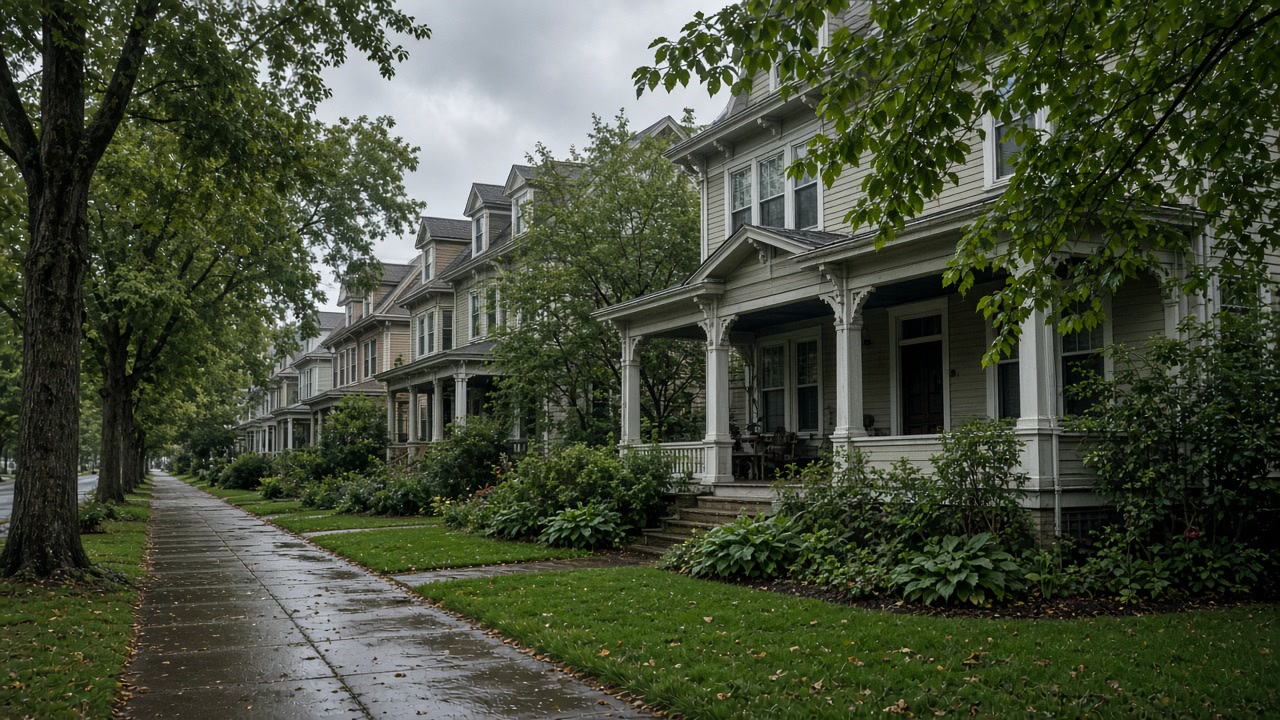
Montclair is a hillside, not a neighborhood on a plain. USGS elevation values sampled inside the township run from about 184 feet on the Glen Ridge and Bloomfield edge to about 639 feet along the First Watchung ridge, a rise of more than 450 feet inside 6.24 square miles. Your house is either taking water from uphill or sending it downhill, and which of those you are decides whether the answer is outside the uphill wall or at the downhill corner.
The federal soil survey says the rest of it outright. The Haledon series, which sits at the base of steeper uplands here, records a perched water table within 30 centimeters of the surface in late winter and early spring and states that lateral seepage is common, particularly at slope breaks. The Boonton series puts that perched table at 18 to 36 inches from November to May. So for something like half the year there is water sitting above the rock and moving sideways, and it reaches a foundation from the side rather than rising under it.
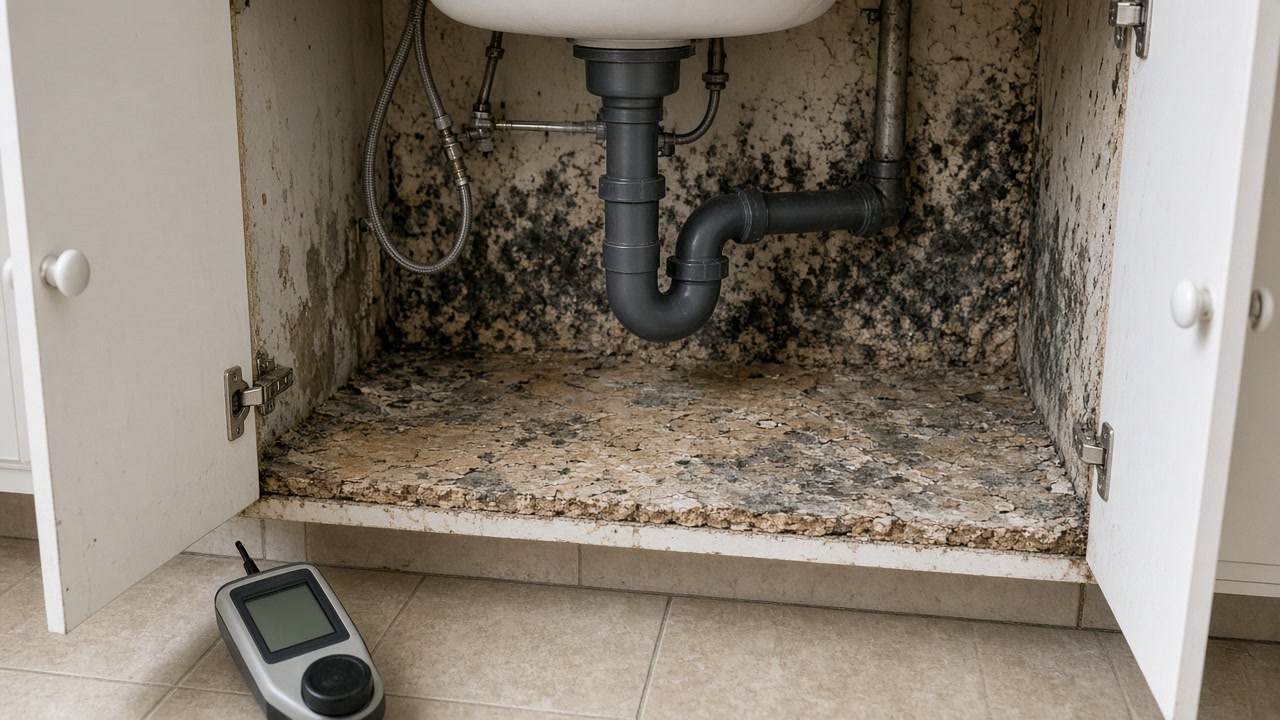
What it reaches is mostly prewar. The median Montclair housing unit was built in 1938, which means no exterior membrane, no sub slab barrier and no perimeter drain as the default condition rather than as a defect somebody created, and in a great many houses a playroom or a rental unit has since been framed tight against that masonry. That finished wall is what turns a damp 1938 basement into a mold job, and it is also what hides the entry point. The stain on the inside is frequently the far end of the problem.
Where this differs from a company that inspects and then quotes
The survey and the removal are separate engagements
One company establishes what is there and where the water is arriving from, a different company takes the material out and prices that against the written finding. Nothing in New Jersey law requires the split: Senate Bill 3275, introduced on February 2, 2026, would start registering mold inspection and remediation contractors and has not been enacted. So here it is a choice, and it is the one we make by default.
We tell you when you do not need anyone
A lot of Montclair basement smells in July are condensation, not a leak. Across July and August, 1,468 of the 1,488 normal hourly dew point readings at Newark Liberty, the nearest station with hourly normals, are 60 degrees or above, so any surface colder than about 61 degrees pulls water out of ordinary air, and a below grade masonry wall sits in the fifties all summer. If a humidity meter and a dehumidifier are the answer, you will hear that on the phone rather than see it in a quote.
Prewar plaster, trim and stonework are treated as worth keeping
Close to six in ten Montclair homes, 9,809 of 16,521 units, were built in 1939 or earlier, and in Glen Ridge it is 81.1 percent. That stock is plaster on lath with original trim around it, and a good deal of it sits inside a historic district, so the scope says what comes off, how it is labeled and what goes back before anybody opens a wall.
The finding is written for whoever actually has to act on it
About 43 percent of occupied Montclair homes are rented and just under half the stock is single family detached, so the person who notices the damp is often not the person who can authorize the work. A transaction changes it again: since 2024 a New Jersey seller has had to disclose on the property condition statement whether the house has had water seepage or pooled water from heavy rainfall, and how many times. Who the document is for changes what has to be measured, dated and photographed in it.
Coverage across Montclair, the surrounding Essex County towns and Clifton in Passaic County
What people ask before they call anyone
My basement smells musty every summer but there is no leak. Do I need anyone?
Probably not, and this is the single most common request we talk someone out of. Across July and August, 1,468 of the 1,488 normal hourly dew point readings at Newark Liberty, the nearest station with hourly normals, are 60 degrees Fahrenheit or above, and the July normal never drops below 60.6 degrees at any hour. A below grade masonry wall sits in the fifties all summer, so ordinary July air condenses on it with no crack, no storm and nothing broken. Buy a humidity meter before you buy anything else. The EPA wants indoor relative humidity below 60 percent and ideally between 30 and 50, so if the basement reads high, the first move is a dehumidifier and shut windows, not a contractor. If it stays high with the dehumidifier running, then you have a water source and it is worth a call.
Water got into the basement two days ago. Is it already a mold job?
Not necessarily, and the next day or so decides it. The EPA's remediation guidance sets out its response strategies as actions to take within 24 to 48 hours of water damage, and describes them as a way to avoid needing remediation at all by getting ahead of growth. If you can get standing water out, air moving and materials genuinely dry inside that window, a lot of what is wet is material you keep. If it has been sitting longer than that, or it is inside a finished wall where you cannot get air to it, plan on the drywall and the insulation coming out. Either way, call while it is still wet rather than after it dries, because the cheap version of this job has a deadline on it.
What is this going to cost?
We do not price the work and we will not guess at a number, because the contractor who sees the property sets it and any figure from us before that is noise. What we can tell you is the shape of it. A survey is a fixed piece of work and the smallest number in the sequence. A removal moves on three things: how much material is affected, what that material is, and how hard it is to put back. That last one is why two Montclair houses four minutes apart can price very differently. Plaster on lath with original trim, a stone or early poured foundation and a historic district around it is a different reinstatement from painted drywall in a 1954 ranch, and close to six in ten houses here are in the first category.
Are you just going to find mold because that is what you sell?
It is the right question to ask anyone in this trade, and the honest answer is that nothing in New Jersey law stops it. Senate Bill 3275, introduced on February 2, 2026, would begin registering mold inspection and remediation contractors and has not been enacted, so the company that finds the water is perfectly free to sell you the removal of everything it touched. We keep the two in different hands: one company writes down what is there, with meter readings and dated photographs, and a different company bids that document. Ask any other firm you speak to whether the person quoting the demolition also wrote the report that justifies it.
Will you wreck the plaster and the trim in an old house?
No, and on this housing stock that has to be planned rather than promised. The median Montclair home was built in 1938 and 9,809 of the township's 16,521 units went up in 1939 or earlier, so what comes off a wall here is usually plaster on lath with original trim around it. The scope written before the work says which trim and baseboard is taken off rather than cut, how it is labeled, and what is reinstated at the end. Where the property sits in a historic district or the work touches the outside of the building, the approvals that go with that are settled before a machine turns up, not after.
My property is not in a flood zone. Why is my basement wet?
Because on this hillside the mapped zones are not where the water is. Of Montclair's 301 paid federal flood insurance claims, 115 were on property rated zone X, B or C, that is outside the Special Flood Hazard Area, and the township's own hazard submission says stormwater flooding is a repeating problem including in areas outside the floodplain. The Engineering Bureau puts the cause on undersized road culverts and encroachments into natural floodways, sized for the conditions of fifty years ago or more. Add a perched water table moving sideways through the soil from November to May and you have a wet wall on a street with no visible water anywhere near it.
Send what you can see and we will read it
Phones answered 24/7. Nothing you send here commits you to anything, and no one calls you from a dialler.