What a Mold Assessment Report Should Contain
A moisture diagnosis that names where the water is arriving and from which direction, a record of what was opened up and what was behind it, readings with the date they were taken, and a written scope of work a contractor can price. The scope is the part with real value: a lab result describes what is in the air, and only the scope tells anyone what to do about it.
Already know you need someone out? Call (315) 640-3590, answered 24/7.
The moisture map, which is the reason to buy one at all
Everything else in the report depends on this page. On this hillside the assessor is not looking for the wettest spot, they are looking for the entry point, and those are frequently not the same place. Montclair rises more than 450 feet from its eastern edge to the First Watchung ridge, and the USDA series description for the Haledon soil says lateral seepage is common, particularly at slope breaks, with a perched water table within 30 centimeters of the surface in late winter. The USGS describes the bedrock aquifer here as a fracture system rather than porous ground, with water present in weathered joint and fracture systems in the upper 200 or 300 feet. Water moving in channels through rock produces a narrow, repeatable seam at one point in a wall rather than general dampness. A report that identifies the seam and the direction it comes from is worth paying for. One that photographs the stain is not.
It has to open something, or it has not really looked
The EPA states that mold is frequently found on walls in cold corners behind furniture where condensation forms, and lists hidden locations including the back side of drywall, wallpaper, paneling, the top of ceiling tiles and the underside of carpets and pads. The New Jersey Department of Health says molds may grow unnoticed above ceilings, behind walls, in attics, basements and crawl spaces, and that growth on cellulose materials such as drywall, ceiling tiles and wood framing can begin to break down studs and joists. Both are saying the same thing: the growth is normally on the face you cannot see. So a report should say where inspection openings were made, what the cavity looked like, and what the moisture meter read inside the stud bay rather than on the paint. If nothing was opened and nothing was metered behind a surface, you have bought an opinion about a painted wall.
Readings, and the month they were taken in
Any reading is a snapshot, and here the snapshot is seasonal. The Essex County hazard plan records that water tables are usually highest in late winter and into early spring and drop from May or June to their lowest in September or October, and the Boonton soil holds a perched water table at 18 to 36 inches from November to May in most years. A report written in early October is describing the driest ground of the year. That does not make it useless, but it must say when it was done, and a good one will tell you what it expects the same wall to do in March. The summer picture is different again: across July and August, 1,468 of 1,488 normal hourly dew point values at Newark Liberty sit at 60 degrees or above, so a below grade wall can run wet in August with no defect at all. Dates and conditions belong beside every number.
What it should say about the outside of the building
A report that stops at the foundation wall has stopped halfway. The Montclair Engineering Bureau lists six named waterways with floodplains inside the township, Toneys, Nishuane, Crescent, Yantacaw, 3rd River and Wigwam, most of them invisible from the street, and states that most flood zone properties sit in floodplains created by undersized road culverts or encroachments into a natural floodway, sized for conditions of fifty years or more ago. None of that is fixable from inside your basement, which is precisely why it has to be in the report: it changes the plan from stopping the water to managing it at your own boundary. And if the recommendation involves regrading or excavating on a slope, the report should flag Chapter 294, the township's steep slopes ordinance, because that work can need township approval rather than being simple landscaping.
The scope of work, in enough detail to compare two quotes
This is the deliverable. It should give the affected area in measured square feet rather than as small, medium or large, name each material to be removed and how far past the visible edge, state what containment and air handling the work needs and why, say what has to be dried and to what target, and separate the removal from the repairs that follow it. Written like that, two contractors are pricing the same job and the difference between their numbers means something. Written as remove mold in basement, the two numbers are not comparable and the cheaper one is usually the smaller scope rather than the better price. A scope is also what protects an old house: it is where you record that the original plaster and trim are to be saved and the wall opened from the least visible side, before anyone arrives with a pry bar.
The one number with a published action level attached
People expect a report to give them a pass or fail figure, and the honest position is that the number with a published target behind it is relative humidity. The EPA states that indoor relative humidity should be kept below 60 percent and ideally between 30 and 50 percent, and lists high humidity at 60 percent among the common moisture problems associated with mold. That is a threshold you can act on, measure yourself and re-check after the work. There is no equivalent threshold for spores, and that is the state's own position rather than ours: the Department of Health mold advisory bulletin says it is not known how much mold is needed to cause health problems, and that there are no standards, regulations or guidelines on which to base a health determination or an exposure assessment. So no spore count on a laboratory report is a pass or a fail in New Jersey. Sampling can still answer a specific question, comparing a sealed room against outdoors or checking a cavity you cannot open, but it describes a moment in time rather than settling whether a building has a fault. If a company quotes you a number to clear, ask whose number it is and what happens if the sample misses it, because that is a term of your contract and not a rule of the state.
Why the report should not come from whoever removes it
New Jersey licenses and certifies nobody for this work, and the state says so itself. The notice standing above the lists of mold companies the Department of Health publishes states that there are no State certification programs for companies performing mold or general indoor air and environmental health services, and that the Department does not endorse or qualify the work or services those companies provide. Nothing in state law therefore prevents the party who measures the problem from also selling you the solution to it. In a town where the median house dates from 1938 and the water usually arrives from uphill, that matters more than usual, because the company paid to dry out a wall has no commercial reason to keep walking up the hill to find the source. Commission the assessment separately, take the written scope to the remediation contractor, and have the verification done by the party not being paid for the demolition.
The report you will be glad of when you come to sell
P.L.2023 c.93 requires a New Jersey seller to disclose whether the property has experienced flood damage, water seepage or pooled water from a natural flood event and how many times, along with any flood insurance claim and the amount received. Answering that from memory is uncomfortable. Answering it with a dated assessment, a scope, and evidence of what was done is not. It matters more here than in some towns because Montclair reports in the 2025 county plan that it does not maintain a list of properties damaged by flooding, and it is not alone: Belleville, Cedar Grove, Livingston, Millburn and Nutley say the same, while Bloomfield, Glen Ridge and Verona do keep such a list. Where the town keeps no record, your own file is the record, and a buyer's inspector is far easier to satisfy with paperwork than with reassurance.
When you do not need a report
Plenty of people who ask for one should not buy it yet. If a known one off event caused it, a washing machine hose or an overflowing sink, and you got air moving and the material dry inside the EPA's 24 to 48 hour window, there may be nothing to assess. The EPA presents that window as the way to avoid needing remediation at all by acting before growth starts, and instructs that items which are not yet moldy be dried within 48 hours. If the problem is a musty smell in August and the hygrometer reads above 60 percent, run a dehumidifier with the windows shut for two weeks first, because you may simply watch it go. Buy the report when the damp persists after that, when it returns in the same place every late winter, or when you are about to build a finished wall against masonry and want the drainage decided first.
Sources used in this guide
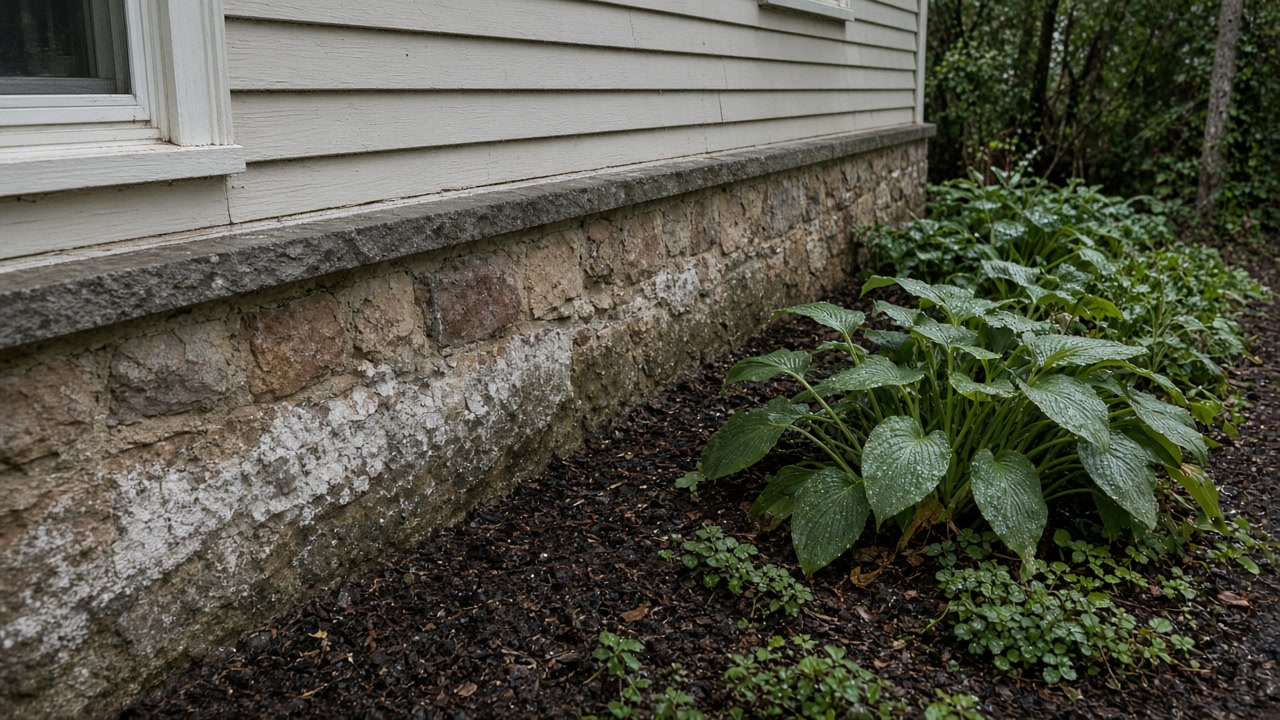
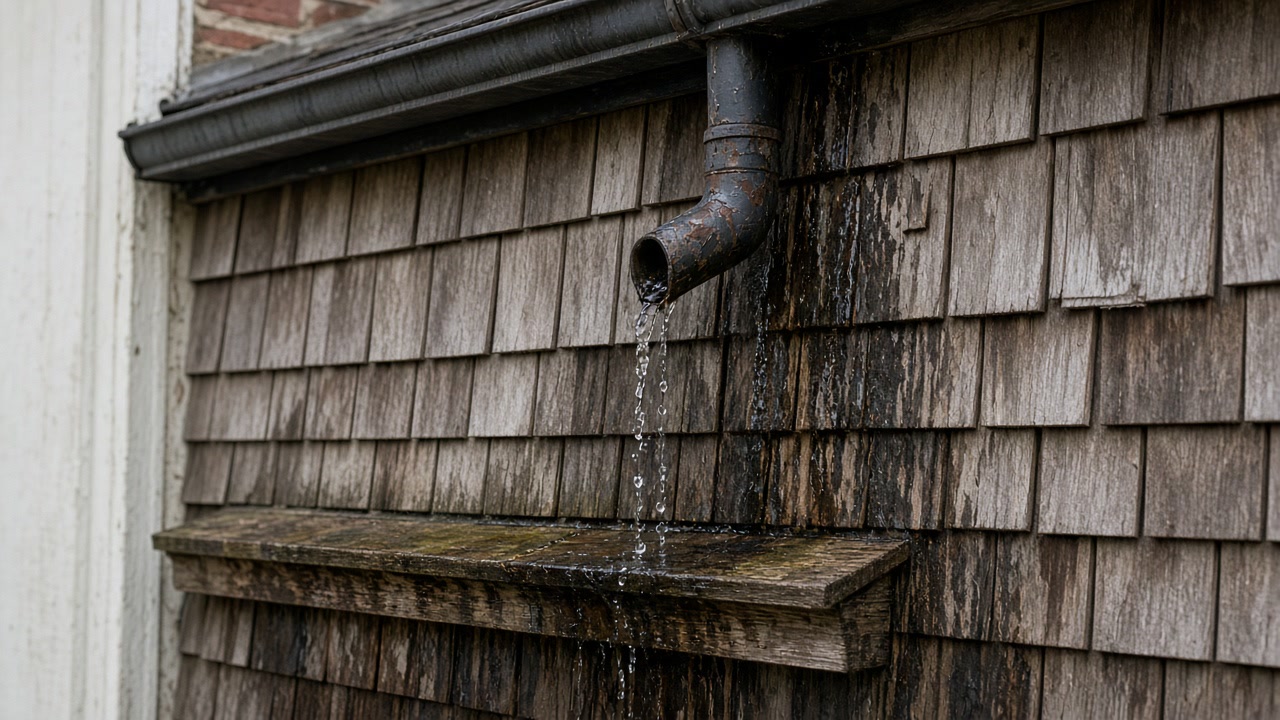
The USDA official series description for the Haledon soil series, formed in coarse textured glacial till made primarily of basalt with red sandstone and shale, states that these soils sit at the base of steeper sloping uplands and in shallow drainageways, that a perched high water table is within 30 centimeters of the surface in late winter and early spring of most years and following periods of extended rainfall, and that lateral seepage is common, particularly at slope breaks.
Source: United States Department of Agriculture, Natural Resources Conservation Service, Official Series Description, accessed 2026-09-21
USGS 3D Elevation Program values sampled on a 383 point grid inside the Montclair township boundary run from about 184 feet above sea level on the southern and eastern edges, where the township meets Glen Ridge and Bloomfield, to about 639 feet on the western side along the First Watchung ridge. That is a rise of more than 450 feet inside a township of 6.24 square miles of land.
Source: United States Geological Survey, 3D Elevation Program point query service, accessed 2026-09-21
The USGS New Jersey Water Science Center describes the bedrock aquifers of this region as fracture systems rather than porous ground: water generally is present in weathered joint and fracture systems in the upper 200 or 300 feet, and below a depth of 500 feet fractures are fewer and smaller and water availability is reduced. Only in coarse grained sandstones is groundwater also present in intergranular pore spaces.
Source: United States Geological Survey, New Jersey Water Science Center, accessed 2026-09-21
The EPA guidance for remediation states that mold is frequently found on walls in cold corners behind furniture where condensation forms, and lists hidden mold locations including the back side of drywall, wallpaper, paneling, the top of ceiling tiles and the underside of carpets and pads, together with walls behind furniture where condensation forms.
Source: United States Environmental Protection Agency, Mold Remediation in Schools and Commercial Buildings, accessed 2026-09-21
The New Jersey Department of Health guidance booklet states that molds may grow unnoticed above ceilings, behind walls, in attics and basements or in crawl spaces, that many building materials such as drywall, ceiling tiles and wood framing contain cellulose on which mold can grow, and that as mold grows on those materials it can begin to break down the studs and joists of buildings.
Source: New Jersey Department of Health, Consumer, Environmental and Occupational Health Service, accessed 2026-09-21
The Essex County hazard mitigation plan records the seasonal pattern of the county's water table: water tables are usually highest in the late winter and into early spring, water may pond or flood for variable periods during that time, and in May or June the table usually begins to drop to its lowest levels, which occur in September or October.
Source: Essex County Office of Emergency Management, 2025 Hazard Mitigation Plan Update, Volume I, accessed 2026-09-21
The USDA official series description for the Boonton series, the till upland soil of northeastern New Jersey formed over red to brown shale, sandstone, basalt and granitic gneiss, records a fragipan in which saturated hydraulic conductivity is low or very low, and a perched water table at a depth of 46 to 91 centimeters, roughly 18 to 36 inches, from November to May of most years. The description notes that most Boonton soils are in areas that have become highly urbanized.
Source: United States Department of Agriculture, Natural Resources Conservation Service, Official Series Description, accessed 2026-09-21
Newark Liberty International Airport is the nearest station with hourly climate normals. Across July and August, 1,468 of its 1,488 normal hourly dew point values are 60 degrees Fahrenheit or above. The July normal dew point averages 63.3 degrees and does not drop below 60.6 degrees at any hour of any day in the month.
Source: National Oceanic and Atmospheric Administration, National Centers for Environmental Information, 1991-2020 Climate Normals, accessed 2026-09-21
The EPA mold course states that indoor relative humidity should be kept below 60 percent and ideally between 30 and 50 percent, and lists high humidity at 60 percent relative humidity among the common moisture problems associated with mold.
Source: United States Environmental Protection Agency, Introduction to Mold and Mold Remediation, accessed 2026-09-21
The Montclair Engineering Bureau states that most of the township's flood zone properties are associated with floodplains resulting from undersized road culverts or encroachments into a natural floodway, that those systems accommodated conditions that existed fifty years or more ago, and that the cumulative effect of continued development has been a steady increase in peak stream flows and localized street flooding during major storms.
Source: Township of Montclair, Engineering Bureau, accessed 2026-09-21
The Montclair Engineering Bureau lists six named waterways with associated floodplains inside the township: Toneys Brook, Nishuane Brook, Crescent Brook, Yantacaw Brook, 3rd River, also known as Pearl Brook, and Wigwam Brook.
Source: Township of Montclair, Engineering Bureau, accessed 2026-09-21
Montclair Township Code Chapter 294, Steep Slopes, exists to protect people and property from improper construction, building and development on steep slope areas, and the code names the hazards it is aimed at as erosion, siltation, flooding, soil slippage, surface water runoff and pollution of surface and ground water supplies from non point sources.
Source: Essex County Office of Emergency Management, 2025 Hazard Mitigation Plan Update, Volume II, municipal annexes, accessed 2026-09-21
The New Jersey Department of Health publishes lists of companies offering mold inspection, testing, remediation and training in homes, and the notice standing above those lists says two things: that there are no State certification programs for companies performing mold or general indoor air and environmental health services, and that the Department does not endorse or qualify the work or services provided by the listed private companies. The page was last reviewed on May 14, 2025.
Source: New Jersey Department of Health, Consumer, Environmental and Occupational Health Service, accessed 2026-09-21
The Department of Health Mold Advisory Bulletin for New Jersey residents states that it is not known how much mold is needed to cause health problems, and that there are no standards, regulations or guidelines on which to base a health determination or an exposure assessment.
Source: New Jersey Department of Health, Consumer, Environmental and Occupational Health Service, accessed 2026-09-21
Under P.L.2023 c.93, a New Jersey seller must disclose on the property condition disclosure statement whether the property is in a FEMA Special or Moderate Risk Flood Hazard Area and any actual knowledge of flood risks, before the purchaser becomes obligated under any contract. The prescribed questions include whether the seller has ever filed a flood damage claim with any insurer including the National Flood Insurance Program and the amount received, and whether the property has experienced any flood damage, water seepage or pooled water due to a natural flood event such as heavy rainfall, and if so how many times.
Source: New Jersey Legislature, P.L.2023 c.93, accessed 2026-09-21
In the 2025 Essex County plan, Montclair reports that floodplain management sits with its Department of Community Services, that no staff hold the CFM floodplain manager credential, and that the township does not maintain a list of properties that have been damaged by flooding or a list of property owners interested in flood mitigation.
Source: Essex County Office of Emergency Management, 2025 Hazard Mitigation Plan Update, Volume II, municipal annexes, accessed 2026-09-21
Whether a town can tell you if an address has flooded varies sharply here. In the 2025 county plan, Bloomfield, Glen Ridge and Verona report that they maintain a list of properties damaged by flooding. Montclair, Belleville, Cedar Grove, Livingston, Millburn and Nutley report that they do not. West Orange answers in the near future, and Caldwell answers that it has no formal process but that the information is part of the borough's incident reports.
Source: Essex County Office of Emergency Management, 2025 Hazard Mitigation Plan Update, Volume II, municipal annexes, accessed 2026-09-21
The EPA remediation guidance presents Table 1 as strategies to respond to water damage within 24 to 48 hours, describing these as guidelines designed to avoid the need for remediation of mold growth by taking quick action before growth starts, and its remediation flow chart instructs that non moldy items be dried within 48 hours.
Source: United States Environmental Protection Agency, Mold Remediation in Schools and Commercial Buildings, accessed 2026-09-21
The American Community Survey puts the median year a Montclair township housing unit was built at 1938, which is 42 years older than the national median and 20 years older than the Essex County median. The value carries no margin of error because it sits at the bottom of the range the table reports.
Source: United States Census Bureau, American Community Survey 2020-2024 five year estimates, accessed 2026-09-21
Services this guide relates to
Need someone to look at it?
Send the details and we will come back to you.