What Changes the Price of a Mold Job
Because the number is set by the contractor who does the work, after they have seen what is behind the wall, and we do not do the work or set the prices. What we can give you is the list of variables that decide it, and you can place your own job on most of them before anybody visits.
Already know you need someone out? Call (315) 640-3590, answered 24/7.
The measured area, which is not the area you can see
Every scope starts with a number of square feet, and the square feet that count are the ones behind the surface. The EPA lists hidden mold on the back side of drywall, on wallpaper and paneling, above ceiling tiles, under carpet and pads, and on walls in cold corners behind furniture where condensation forms. The New Jersey Department of Health adds that growth may sit unnoticed above ceilings, behind walls and in crawl spaces, on drywall, ceiling tiles and wood framing. So a patch the size of a dinner plate on the paint can be a stud bay, and a stud bay can be a wall. This is the single biggest reason a phone estimate is worthless and also the reason the measured area belongs in a written assessment before anybody quotes, rather than being discovered by the crew on the second morning.
Whether the water has actually stopped arriving
Removal against a live source is a job you pay for twice. The Boonton soil under much of this ground holds a perched water table at roughly 18 to 36 inches deep from November to May in most years, which sits at the height of a basement wall rather than below the footing, and the Essex County hazard plan records the county water table peaking in late winter and early spring before dropping to its lowest in September and October. A wall dried and rebuilt in October, against a source that returns in February, is a rebuild you will be discussing again in the spring. So the honest sequence is source first, then removal, and a quote that does not say what happens to the water is a quote for half the work. It is also why the cheapest bid is often the one that skipped this question.
How much has to be opened up, and put back
Of the 265 Montclair flood insurance claims that record a basement type, 119 were on finished basements or enclosures. A finished basement changes a job's shape completely, because the studs, batt insulation and drywall built tight against old masonry hold the water in place and hide it, so the work includes taking that wall apart, drying the masonry behind it, and building it back. An unfinished basement with the same amount of water can be a fraction of the scope. If you are deciding today whether to finish a lower level, that decision has more effect on any future remediation bill than any choice you will make about a contractor. The drainage work goes in first, or the wall goes back on a problem you have covered over.
Whether the cause is outside the building
Work that stays inside the wall is one kind of job. Work that involves regrading, excavation or a new drainage structure on the uphill side is another, and it can bring permissions with it. Montclair's own Engineering Bureau states that most flood zone properties sit in floodplains created by undersized road culverts or encroachments into a natural floodway, sized for conditions of fifty years or more ago, so some of what arrives at your foundation is not fixable at your boundary at all. And Chapter 294 of the township code, Steep Slopes, exists to prevent improper construction on slope areas, naming erosion, flooding, soil slippage and surface water runoff. Montclair also runs three separate chapters that can touch one basement job, construction under Chapter 121, flood hazard under Chapter 161 and stormwater under Chapter 295, and every town here has its own code agency and its own chapter numbers.
Plaster, original trim and a house built before the war
The median Montclair housing unit was built in 1938, and 9,809 of the township's 16,521 units, 59.4 percent, went up in 1939 or earlier. That changes the labor, not just the sentiment. Lath and plaster does not come off in sheets, original trim has to be removed intact and refitted rather than replaced from a merchant's stock, and a rubble or early poured foundation is not a flat surface to work against. It also varies enormously street to street: Glen Ridge is at 81.1 percent pre-1940 while Cedar Grove is at 8.7 percent and Livingston at 9.2 percent, so two towns that touch each other need different conversations. A quote written for a post war basement in Livingston tells you very little about what the same square footage costs in a Montclair or Glen Ridge house.
Whether containment and negative air are needed
Containment is a sealed work area with controlled airflow so that taking a wall apart does not distribute the contents of the wall through the rest of the house. It adds materials, setup time and equipment to a job, and it is not always warranted. What decides it is the size of the affected area, whether the occupied space shares air with the work area, whether the route out of the basement passes through living space, and whether anyone in the household has a reason to avoid exposure. This is a scope decision, which is why it belongs in a written assessment rather than in a conversation on the day, and it is one of the items to check when two quotes differ sharply. A cheaper number that omits containment is a different job, not a better price.
What kind of water it was
Here this usually works in your favor, and it is worth knowing why. The Essex County hazard mitigation plan states that combined sewer overflows exist in the county within the older Passaic Valley Sewerage Commission and Joint Meeting sewered areas, and that within the unconsolidated portion of Essex County there are no known combined sewer overflows. The suburban towns on and around this ridge are in that second group, so water in a basement here is normally groundwater, surface runoff or a storm drain surcharge rather than sanitary sewage backing out of a shared pipe. That generally means a shorter list of materials that must be discarded and a different disinfection question. Where the suspected source is a service line or a lateral rather than groundwater, note that Montclair owns its own Water Bureau and Sewer Utility, so the investigation is a township matter.
Whether the checking is done by a second pair of hands
Post-remediation verification is someone returning after the work to confirm the affected material is gone, the cavity is dry to target and the source has been dealt with. Having it done by the party that did the removal costs less and proves less. Having it done independently is an extra line on your total and the only version that means anything, particularly in New Jersey, where the state licenses and certifies nobody for either half. The Department of Health notice above its own list of mold companies says there are no State certification programs for this work and that the Department does not endorse or qualify it. No state rule keeps the two roles apart, so the separation has to be arranged rather than assumed. Decide up front which you are buying, because adding it afterwards means bringing somebody into a job that is already closed and a wall that is already back up.
The cheapest version of this job, every time
It is the one you catch early. The EPA presents its 24 to 48 hour table as a way to avoid needing remediation at all, by acting before growth starts, and instructs that items which are not yet moldy be dried inside 48 hours. Material dried inside that window is generally material you keep. The other cheap version is the one you prevent: the EPA target of below 60 percent relative humidity, ideally 30 to 50, is met in most of these basements with a dehumidifier and closed windows in July. And since Essex County Airport records a 49.05 inch annual precipitation normal with no month below 2.85 inches, there is no dry season to wait for. A drainage fault here is being tested most weeks of the year, so acting in spring rather than next spring is itself a cost decision.
How to get a number you can actually rely on
Get the affected area measured and written down, get the source named and the direction it comes from, and get a scope that lists the materials, the containment and the drying targets. Then two contractors are pricing the same work and the gap between them is information. Send us the details of what you are seeing, when it appears and what the basement is finished with, and we will tell you which of these variables is likely to dominate your job and what the sensible first step is. There is no obligation, and if the answer is a hygrometer and two weeks of readings, that is what we will say.
Sources used in this guide
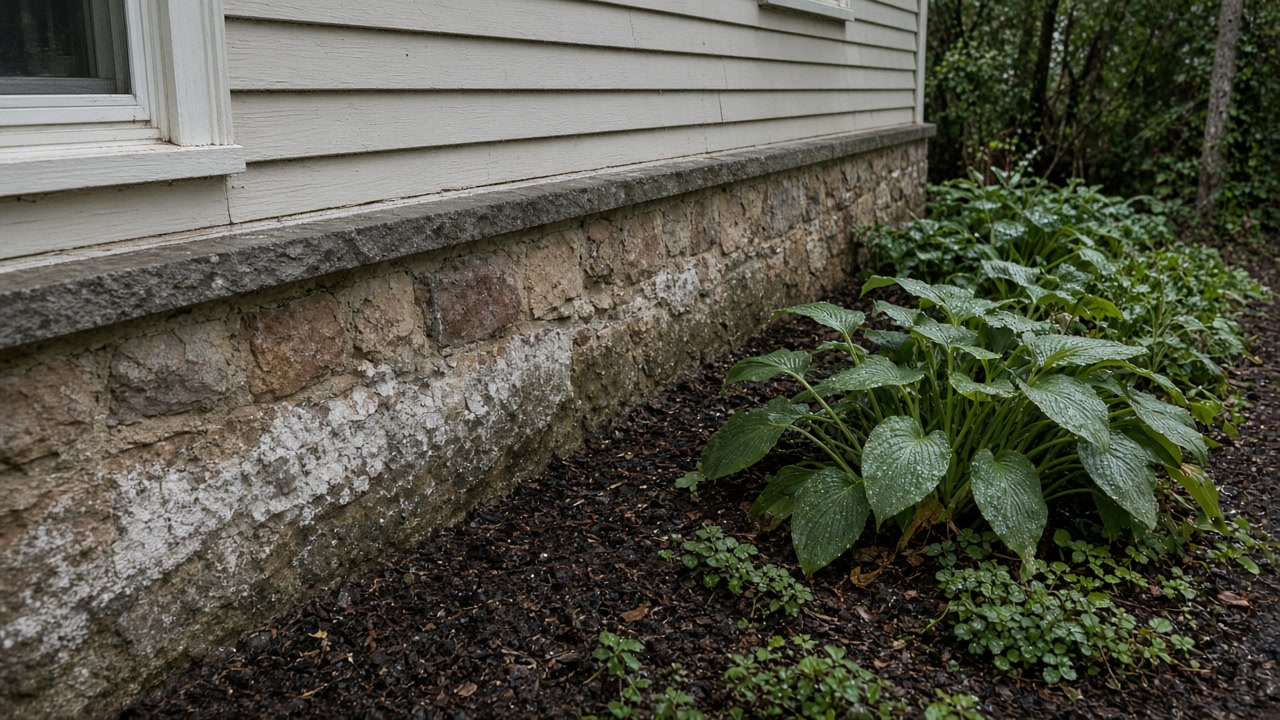
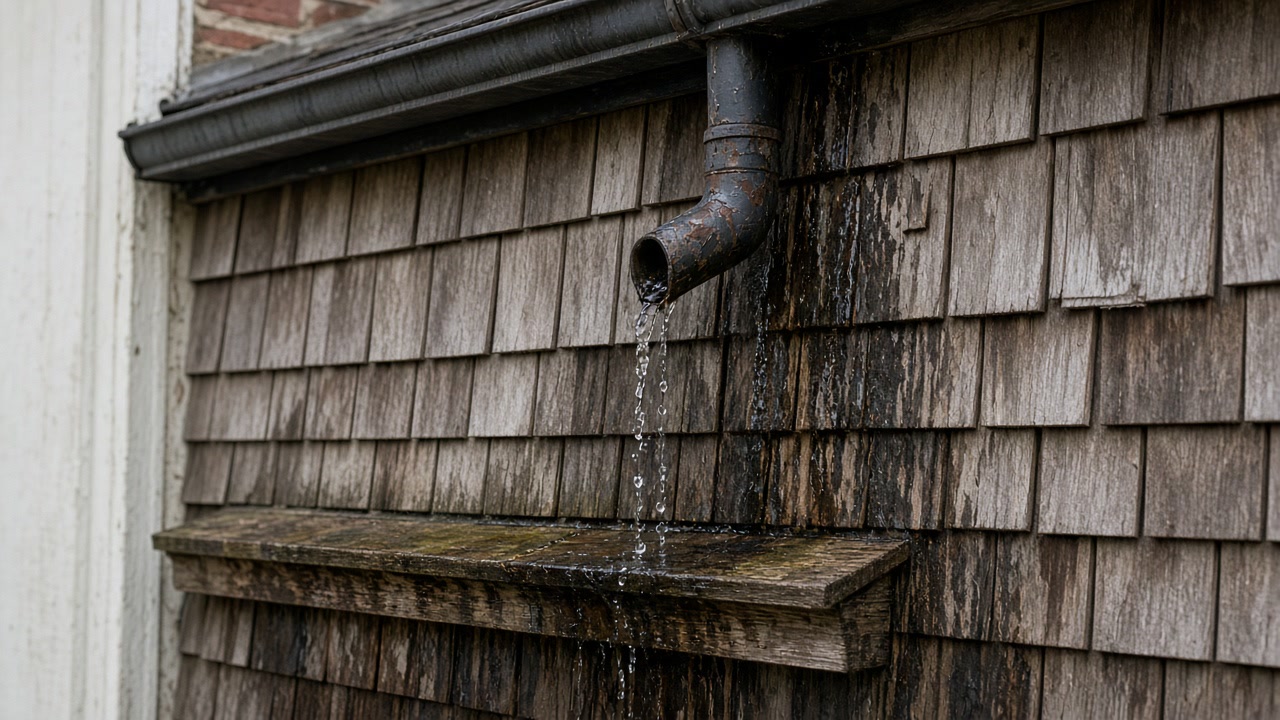
The EPA guidance for remediation states that mold is frequently found on walls in cold corners behind furniture where condensation forms, and lists hidden mold locations including the back side of drywall, wallpaper, paneling, the top of ceiling tiles and the underside of carpets and pads, together with walls behind furniture where condensation forms.
Source: United States Environmental Protection Agency, Mold Remediation in Schools and Commercial Buildings, accessed 2026-09-21
The New Jersey Department of Health guidance booklet states that molds may grow unnoticed above ceilings, behind walls, in attics and basements or in crawl spaces, that many building materials such as drywall, ceiling tiles and wood framing contain cellulose on which mold can grow, and that as mold grows on those materials it can begin to break down the studs and joists of buildings.
Source: New Jersey Department of Health, Consumer, Environmental and Occupational Health Service, accessed 2026-09-21
The USDA official series description for the Boonton series, the till upland soil of northeastern New Jersey formed over red to brown shale, sandstone, basalt and granitic gneiss, records a fragipan in which saturated hydraulic conductivity is low or very low, and a perched water table at a depth of 46 to 91 centimeters, roughly 18 to 36 inches, from November to May of most years. The description notes that most Boonton soils are in areas that have become highly urbanized.
Source: United States Department of Agriculture, Natural Resources Conservation Service, Official Series Description, accessed 2026-09-21
The Essex County hazard mitigation plan records the seasonal pattern of the county's water table: water tables are usually highest in the late winter and into early spring, water may pond or flood for variable periods during that time, and in May or June the table usually begins to drop to its lowest levels, which occur in September or October.
Source: Essex County Office of Emergency Management, 2025 Hazard Mitigation Plan Update, Volume I, accessed 2026-09-21
Of the 265 Montclair flood insurance claims that record a basement type, 119 were on properties with a finished basement or enclosure and 138 on unfinished ones. Across this whole service area the same field shows finished basements outnumbering unfinished ones in Glen Ridge, Verona, Cedar Grove, Millburn, Livingston and Clifton.
Source: Federal Emergency Management Agency, OpenFEMA FIMA NFIP Redacted Claims v2, accessed 2026-09-21
The Montclair Engineering Bureau states that most of the township's flood zone properties are associated with floodplains resulting from undersized road culverts or encroachments into a natural floodway, that those systems accommodated conditions that existed fifty years or more ago, and that the cumulative effect of continued development has been a steady increase in peak stream flows and localized street flooding during major storms.
Source: Township of Montclair, Engineering Bureau, accessed 2026-09-21
Montclair Township Code Chapter 294, Steep Slopes, exists to protect people and property from improper construction, building and development on steep slope areas, and the code names the hazards it is aimed at as erosion, siltation, flooding, soil slippage, surface water runoff and pollution of surface and ground water supplies from non point sources.
Source: Essex County Office of Emergency Management, 2025 Hazard Mitigation Plan Update, Volume II, municipal annexes, accessed 2026-09-21
Montclair enforces the New Jersey Uniform Construction Code through its own Construction Code Enforcing Division under Chapter 121 of the township code, with a Construction Official and separate building, electrical, plumbing, fire and elevator subcode officials. Flood hazard work falls under Chapter 161, Flood Damage Prevention, administered by a Floodplain Administrator, and stormwater under Chapter 295.
Source: Essex County Office of Emergency Management, 2025 Hazard Mitigation Plan Update, Volume II, municipal annexes, accessed 2026-09-21
Each of the eleven Essex County municipalities here enforces the New Jersey Uniform Construction Code through its own local agency rather than through the county or the state: Montclair under Chapter 121, Belleville under Chapter 12, Bloomfield under Chapter 149, Caldwell under Chapter 81, Cedar Grove under Chapter 119, Glen Ridge under Chapter 15.04, Livingston under Chapter 110, Millburn under Chapter 9, Nutley under Chapter 272, Verona under Chapter 190 and West Orange under Chapter 13.
Source: Essex County Office of Emergency Management, 2025 Hazard Mitigation Plan Update, Volume II, municipal annexes, accessed 2026-09-21
The American Community Survey puts the median year a Montclair township housing unit was built at 1938, which is 42 years older than the national median and 20 years older than the Essex County median. The value carries no margin of error because it sits at the bottom of the range the table reports.
Source: United States Census Bureau, American Community Survey 2020-2024 five year estimates, accessed 2026-09-21
Of Montclair township's 16,521 housing units, 9,809 were built in 1939 or earlier. That is 59.4 percent of the whole stock, and 73.9 percent of Montclair homes were built before 1960.
Source: United States Census Bureau, American Community Survey 2020-2024 five year estimates, accessed 2026-09-21
The twelve municipalities in this service area split cleanly into two building eras. Glen Ridge at 81.1 percent and Montclair at 59.4 percent of units built in 1939 or earlier sit far above everything else; Bloomfield, Verona, Millburn, Belleville, Nutley, Clifton and Caldwell cluster between 30 and 38 percent; West Orange is at 24.8 percent; and Livingston at 9.2 percent and Cedar Grove at 8.7 percent are effectively post war towns.
Source: United States Census Bureau, American Community Survey 2020-2024 five year estimates, accessed 2026-09-21
The Essex County hazard mitigation plan states that combined sewer overflows exist in the county within the older Passaic Valley Sewerage Commission and Joint Meeting sewered areas, and that within the unconsolidated portion of Essex County there are no known combined sewer overflows.
Source: Essex County Office of Emergency Management, 2025 Hazard Mitigation Plan Update, Volume I, accessed 2026-09-21
Montclair runs its own Water Bureau and Sewer Utility rather than buying service from a regional supplier, and the Montclair Water Bureau is listed in the county plan as serving 37,669 people. Neighboring Glen Ridge and Livingston also run their own water departments, while Belleville and Bloomfield are served by the Newark Water Department.
Source: Essex County Office of Emergency Management, 2025 Hazard Mitigation Plan Update, Volume I, accessed 2026-09-21
The New Jersey Department of Health publishes lists of companies offering mold inspection, testing, remediation and training in homes, and the notice standing above those lists says two things: that there are no State certification programs for companies performing mold or general indoor air and environmental health services, and that the Department does not endorse or qualify the work or services provided by the listed private companies. The page was last reviewed on May 14, 2025.
Source: New Jersey Department of Health, Consumer, Environmental and Occupational Health Service, accessed 2026-09-21
The EPA remediation guidance presents Table 1 as strategies to respond to water damage within 24 to 48 hours, describing these as guidelines designed to avoid the need for remediation of mold growth by taking quick action before growth starts, and its remediation flow chart instructs that non moldy items be dried within 48 hours.
Source: United States Environmental Protection Agency, Mold Remediation in Schools and Commercial Buildings, accessed 2026-09-21
The EPA mold course states that indoor relative humidity should be kept below 60 percent and ideally between 30 and 50 percent, and lists high humidity at 60 percent relative humidity among the common moisture problems associated with mold.
Source: United States Environmental Protection Agency, Introduction to Mold and Mold Remediation, accessed 2026-09-21
At Essex County Airport in Caldwell, the closest first order station to the Watchung ridge itself, the 1991 to 2020 annual precipitation normal is 49.05 inches, spread evenly enough that no month falls below 2.85 inches and the July normal is 4.55 inches.
Source: National Oceanic and Atmospheric Administration, National Centers for Environmental Information, 1991-2020 Climate Normals, accessed 2026-09-21
Services this guide relates to
Need someone to look at it?
Send the details and we will come back to you.