Assessment in Clifton
Mold Assessment in Clifton, From the Low Streets to the Hill
A stain on a Clifton wall does not say how the water got in, and a brook is not the only suspect. Tell us the street and we help set up the survey that finds the path.
Survey first in Clifton: $100 off your first job in Clifton, credited by us once it is booked.
We help you book a moisture and mold assessment first, then a separate company for any cleanup or drying, starting uphill of the stain.
The Uphill Side promise
- Talking to us is free and commits you to nothing.
- We point you uphill of the stain before anyone talks removal.
- Your assessor and your remover will be different companies.
- Your $100 is applied exactly as the offer terms are written.
Every contractor you hire answers to your agreement with them.
Mold Removal Montclair, (315) 640-3590
Read the terms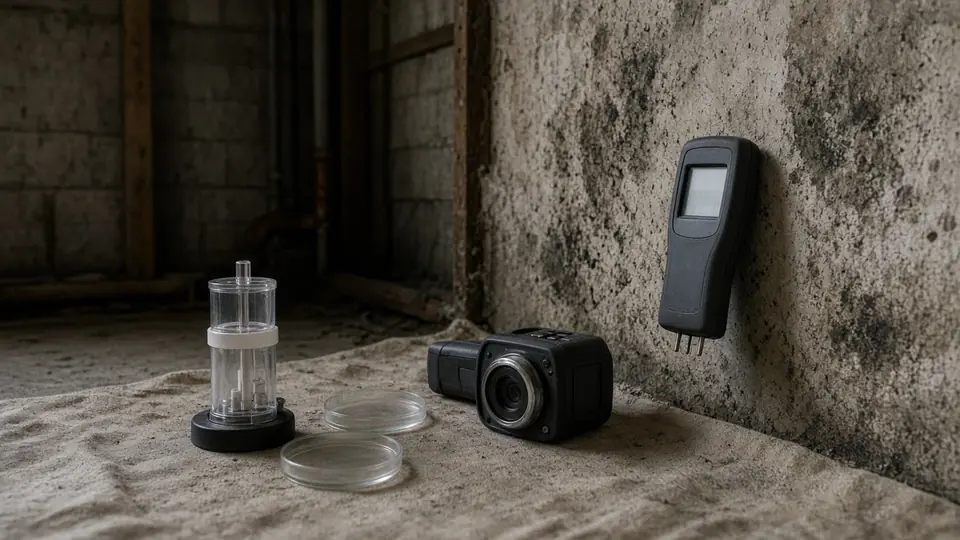
Questions
A moisture survey in Clifton: the short answers
Why does a Clifton survey start with the uphill wall?
Clifton's higher ground has soils that hold water above the rock and let it seep sideways. Water can enter on the uphill side, and the stain can show elsewhere. Readings on that wall tell the assessor first.
What if my Clifton street is flat?
Then the assessor looks at grading, gutters, paving and the neighboring lot. Tell them how rain behaves around your house.
Can I use the survey when selling or buying a Clifton house?
Yes. A dated report shows what the wall read and where the water entered. Buyers can pair it with a written question to the seller about seepage and flood damage.
Does the assessor also remove the mold?
They should not. Book the assessment separately, have a different company remove from the written scope, and have a third check the result.
My Clifton landlord says the basement damp is just humidity. What do I do?
Humidity shows in warm, muggy weeks and fades when the air dries. Damp that follows rain or returns every March can point to water from outside. Write down the dates, ask for the signed flood rider, and book the survey so the report says which it is.
Signs
What Clifton households notice ahead of a moisture survey
- A stain that comes back each spring A spring return can suggest water moving through soil, so ask about the uphill wall.
- A damp patch low on one wall Damp low on a single wall can mean a single entry point worth tracing.
- A musty basement in a city flat Renters can ask for readings and a dated report before the landlord replies.
- Water after rain with no river nearby Rain that collects around a house can reach the wall without any brook involved.
Clifton's 415 feet of height and where your house sits
Sampled ground across Clifton climbs from near sea level to about 415 feet, so no single Clifton story fits every basement. Tell the assessor whether your street is low, on a slope or near the top, and which side of the house the ground rises toward.
On the higher ground the soil maps list Holyoke and rock-outcrop ground, and Boonton and Haledon units sit inside the city. The USDA says Haledon soils hold a perched water table in late winter and spring, with lateral seepage common at slope breaks. So on a Clifton hill, the uphill wall deserves the first set of readings.
On the low streets, the first guess changes. Ask about grading, gutters, paved yards and the lot next door.
Walk to the high side and look at the ground. Does a retaining wall, a slope or a neighbor's yard sit above your wall? Photograph it. The assessor will want to see which wall faces it.
When no brook is named: what the survey does instead
No watercourse is named for your street here, so a survey has to work from the building: readings at several heights, readings away from the stain and a look at the outside of the wall.
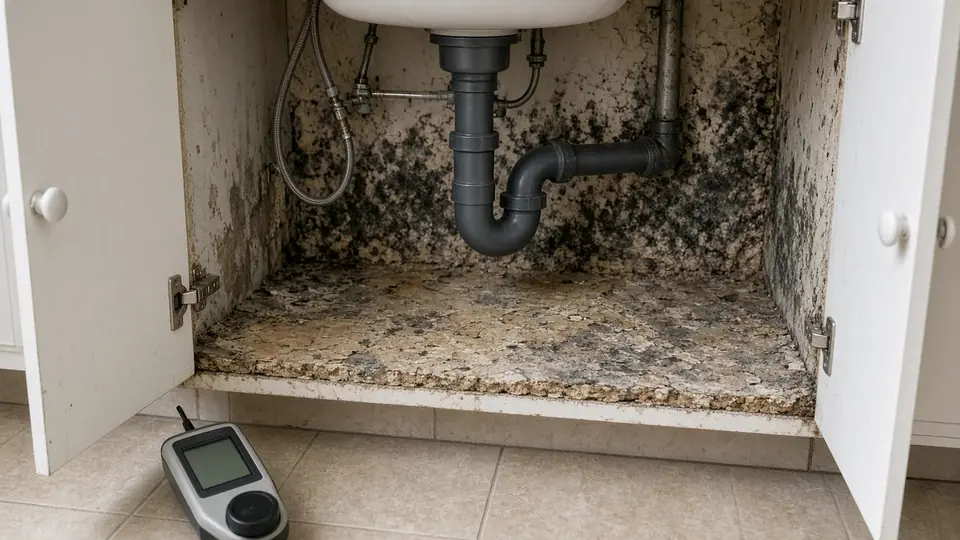
Ask the assessor to write down where the readings were taken, which wall was wettest and what they think the path is. Ask them to say when they are unsure, and to name what a second visit would check. An honest report with a gap beats a confident guess.
Mold can grow out of sight behind walls and in basements, the state health department says. So a clean-looking wall is not a clean answer. Ask for readings behind the finish.
Ask for a short written summary that a non-expert can read. You should be able to hand it to a landlord, a buyer or a contractor without explaining it.
A 1951 Clifton house, a rented flat and the paper you can ask for
Clifton's median house was built in 1951, and renters fill 40.4 percent of the occupied ones. Tenants should write down the room and the date and ask the landlord for the signed flood rider the state requires. If you are buying, put your seepage question to the seller in writing.
Clifton's flood maps are its own, drawn for Passaic County. Ask the assessor to note whether the house sits inside or outside the mapped zone, then remember that more than half of the city's paid claims were outside it.
The assessor writes a scope. A separate company removes. Someone other than the remover checks. Ask for that order before you start.
Other jobs
Switching jobs in Clifton: the other two
Nearby
Towns next to Clifton, same survey
Survey first in Clifton: $100 off your first job in Clifton, credited by us once it is booked.